

Spectacular in its intent, vastly ambitious and (almost) no holds barred, Amazon's entry on India's market place has challenged almost every preconceived view of seemingly unsurmountable constraints
Logistics from warehousing to delivery, spotty (or non-existent) adresses, reluctance of local merchants to engage or a smattering of local languages were some of the road blocks Mr. Bezos willed to undertake
And Mr. Bezos' personal commitment to the Indian venture cannot be faulted
But the free rein given by the Indian regulator to foreign direct investment in 2016 turns out to have limits
A test of wills confronting Amazon's (and following its Indian acquisition, Walmart's) ambitious plans as the Indian government supports unabashedly - and unsurprisingly - Indian business
In King’s Indian Defense, we explained how the strong interest of foreign distributors to tap in the vast Indian population meshed with the governmental efforts to modernize the economy
The free hand given to foreign direct investment (FDI) in India in 2016 went against notoriously restrictive traditions and wariness with regard to foreign capital
But the intent to shake complacency in Indian retail was convincing and the FDI rule book set out to benefit from what was best in e-commerce, a market place for suppliers to access buyers on a global scale
What the American firms, Amazon
The Chinese contenders, Alibaba
The ultimate prize
For global retailers and digital titans in search of expansion, no emerging market comes anywhere near India
A young population
- More than 65% of Indians are under 35 today and by 2020, the average age is expected to be 29 – compared to an average 37 in China
Fast rising disposable income, multiplied by 3.5 between 2010 and 2018 (in million INR)
source: tradingeconomics.com
66.5% of the Indian population lives in rural areas according to World Bank statistics, presumably a logistical challenge due to poor infrastructure
source: tradingeconomics.com
Ubiquitous cell phone ownership, with an estimated 1 billion active mobile phone connections (Jan ’18)
Access to Internet, driven by rural growth, expected to reach 627 million (about 50% of total population of which an estimated 200 million users in rural areas) in 2019, according to Kantar IMRB
All together a huge boost for the number and the volume of transactions on the mobile-only digital payment system since 2016 launch
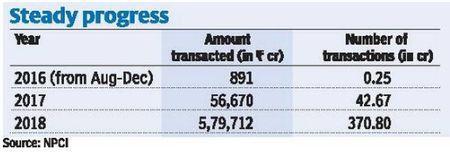
A sense of unease
“India is another example of how we globalize an offering like marketplace…” J. Bezos, Letter to Shareholders 2015
Cautiously exploratory, Amazon launched a website called Junglee.com in India in February 2012 as a comparison-shopping website
Following through, Amazon has certainly made the largest commitment of all the US tech giants (Amazon

Since 2015, the company also engaged with more than 10 000 sellers in a long-term recruitment effort on its market place, and introduced Amazon Tatkal in 2016, an initiative facilitating online access for small and medium businesses (SMBs)
With a uniquely complex range of logistical options linking sellers and consumers, all the way to partnerships with India’s millions of small stores, Amazon’s commitment to the creation of a global marketplace cannot be faulted
Its e-commerce market share in India is estimated at 30%, close to its direct contender Flipkart (35%), according to Praxis Global Alliance
Very much in line with the intention of India’s regulators, the company publicized, as of April ’19, the success of local merchants on international markets, with export sales exceeding $1 billion (+56%), on 140 million products listed on Amazon’s website
With more than 80% of current export vendors from small cities, the achievement is astounding
But, as early as 2016, when India relaxed FDI rules allowing 100% foreign ownership of 'pure market place' e-commerce, Amazon lobbied for the hybrid model, part 'market place' and part 'inventory led'
Seemingly technical, the extension would be allowing Amazon to act as a retailer selling its own inventory as well as an intermediary proving technological and logistical services
- A development exposing India's millions of small retail shops to extinction and a request Amazon could not reasonably expect to be granted
- And it was not to be, as the complementary - loophole-plugging - rules of Dec. '18 made clear
Full steam ahead
Marching to the beat of its own drum, Amazon India in fact implemented its 'hybrid' business model

The company relied on subsidiaries, co-owned with Indian partners, and holding their inventory in Amazon warehouses
- Cloudtail, a partnership co-owned with India's Infosys founder, ended up fronting for 40% of Amazon's sales in India, followed by Appario,
- exclusivity deals, volume rebates and logistics services billed on basis of sales on the platform followed
The strategy stood out when compared to the greater caution of its most direct competitor Flipkart and the restraint of Alibaba : Amazon could hardly be surprised when the Indian regulator moved in December '18 to close all the loopholes
Since the publication of the amended rules, Amazon has shuffled its participations in the retail subsidiaries again, relying presumably on legal advice that the diversification of Cloudtail and Appario on competing platforms would suffice ..
We have no way of knowing how stringent the interpretation of the Dec. '18 rules will turn out to be but the intent remains clear and Amazon India will be walking a tight rope

How Amazon's competitors can be expected to respond will be discussed in our follow-up report