
The disruptions derived from the Ukrainian war and the European sanctions on Russian energy have been the focus of attention
It is true that, in part by anticipation, the sanctions have dislocated traditional outlets of Russian oil, but worldwide energy markets of a commodity which is – with technical peculiarities – fungible, will be reallocating global supplies, including oil originating from Russia
Adjustments may prove costly – alleviated today by high oil prices – but the doubling, since the invasion of Ukraine, of the quantity of Russian oil transported by the European Union's three largest maritime nations, Greece, Cyprus, and Malta, signaled the potency of market forces (the Independent, June 6, 2022) and the EU scrapped plans to stop EU-owned ships from transporting Russian oil to third countries
Also, the European embargo applies only to seaborne crude (75% of imports) while oil delivered by pipeline to refineries in the Czech Republic, Germany, Hungary, Poland and Slovakia is temporarily exempt (Only Germany and Poland are committed to stop pipeline deliveries by end '22)
However by provision number 2 of the June 3, 2022 sanctions package, the EU, in lockstep with the UK, will block insurance and financing of Russian oil transport – crucial for the shipping industry – at the end of a wind down period of 6 months. Impacting 95% of the tanker insurance market, the ban will remove a large tanker capacity from the market because, if transport might be insured by the Russian state itself, this is not likely to suffice for most ports worldwide who only allow tankers to dock with full insurance coverage - in some many words, a significant deal because a sizable chunk of Russian oil exports is bound to be withdrawn from the world market
While market disruptions following the Russian invasion might actually subside over the next 18 months, less discussed bottlenecks portend higher prices in the long run
- Many oil producing countries run at capacity, with little incentive to invest as the policies negating fossil fuels consumption grow ever louder
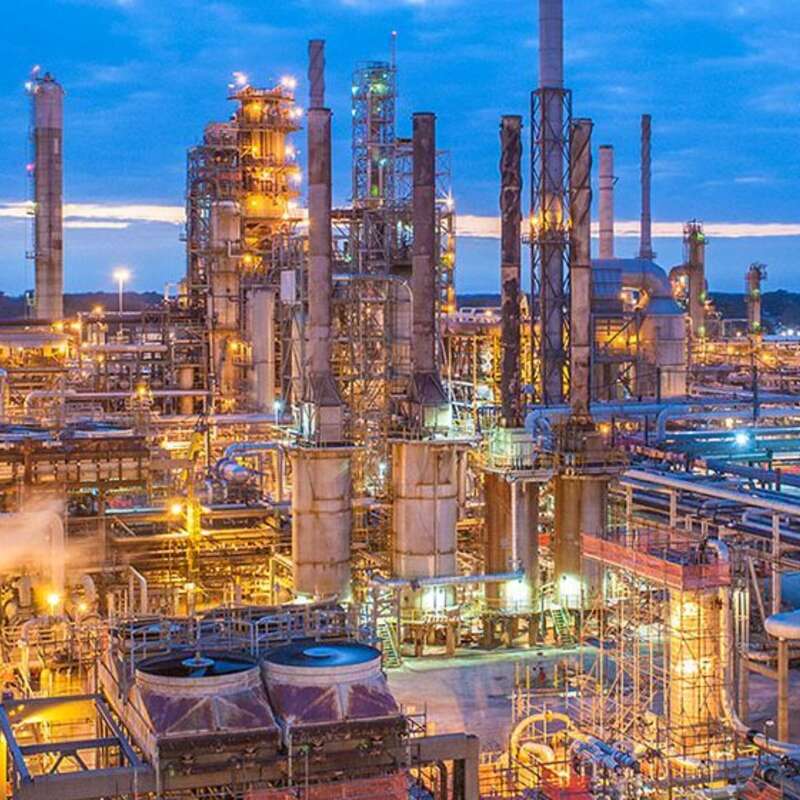
- While the fracking industry promises unusual flexibility in response to market pressures, putting the US at great advantage, a key link in the supply chain will put a damper on production – refining capacity
According to the EIA, the U.S. Energy Information Agency, as a result of several U.S. refinery closures in 2020, U.S. operable atmospheric crude oil distillation capacity, the primary measure of refinery capacity in the United States, dropped 4.5% to a total of 18.1 million barrels per calendar day (b/cd) at the start of 2021
In 2021, five separate refineries shut down and total capacity is said to be down to 17.9 million barrels per day, a loss of almost 1 million barrels per day since early 2020
The theme lists major refiners operating in the U.S. and includes oil majors with important refining capacity – Exxon
Disparate performances of refiners mirror distinct strategies - combining exploration and production (in shale) with large refinery capacity at Marathon Oil - or focused on the downstream activities (midstream, marketing and chemicals) at Philips 66, requiring careful evaluation before investing in this promising industry
The benchmark of the theme is USCF United States Oil Fund® LP