

Stock markets are on a tear
Performances shattering previous records keep stacking up
Economic theory, guilty of missing out on AI, tagged as a generational shift, takes the flack
Risk exposure is supposed to drive asset valuation. However....
- Risk is up, whether in geopolitics, in inflationary anticipation or in recessionary trends, and the stock market should be pulling back – it does not
- Investor rational should be siding with caution – the opposite is true in a bonfire disposing of conventional wisdom
Appetite for risk seems inexhaustible and stocks are scaling new heights
Risk exposure has been turned upside down, its potential negativity hollowed out and its potential rewards magnified, in the glow of AI's benign lights...
Could it be true?
Could stock performance be indifferent and delinked from perceived risk?
Could fear, and not cool evaluation of risk, drive markets from commanding heights, “fear to be left behind” and its twin, “fear to be stuck with losses”?
Viewed from a distance, as through a fractured looking glass, multiple models, complex structures and levels of interpretation all carry a figment of truth in anticipating the future
AI growth momentum - for investors, an article of faith
The market’s feverish gold rush for all things ‘AI’ highlights familiar misconceptions
- Buying with abandon, investors make no difference between ‘picks and shovels’ which make the ‘rush’ possible in the first place (Nvidia chips anyone?), and stakes in the ‘miracle’ product itself (OpenAI, Anthropic, Meta….) …Anything goes !
- Buying with abandon, investors take the investments of AI leaders at face value, mixing capital allocation in value-adding R&D, in data rights acquisition and in marketing necessities
- Buying with abandon, investors believe that AI miraculously negates competition, trusting probably in those immense investments to keep pesky competitors at bay
Overlapping motivations challenge AI investors’ shaky assumptions
- "Shovels" are just tools of the trade – even shovels with the Nvidia brand will meet their competition soon, except nobody knows how soon and how effective the firm will be in the race to stay one step ahead
- Google's Ironwood, the seventh generation of its Tensor Processing Unit, introduced early November '25, is a 'custom' silicon, designed for a host of AI applications, snapping on the heels of Nvidia
- Foundational models are requiring considerable human talent and enormous investments, but the fate of pathbreakers such as OpenAI, Anthropic or Meta, is to level access for nimble competitors, introducing smaller models, requiring less data without compromising their effectiveness
- Capital allocations by AI firms are not all made of the same steel - stretching beyond the horizon, massive costs generated by individual users' access, free or against a modest fee, aim at purported market dominance, an open-ended marketing gamble of sorts...
- As AI comes in many formats, from narrowly targeted agents to all-encompassing reasoning 'general intelligence' (AGI), leading providers of AI applications may also come in many sizes, making a 'winner-take-all' strategy more unlikely
Goals pursued by leading providers lack clarity for the best of reasons - goal posts move and move again, upped by ever more spectacular R&D achievements and, at least to diehard supporters, the rate of progress is exponential...
The dynamics of this 'discovery' mode supports breath-taking momentum which, in turn, insures that the investor assumptions, however 'shaky' on their own, are mutually supportive and credible in a whirl of technological advance...
AI growth momentum - for pathbreakers, a glint of untold riches
‘Superintelligence’ is identified with the "holy grail", turbocharging the AI juggernaut
AGI systems are expected to match or exceed human cognition, including the ability to learn new things
General Intelligence (AGI) rides on conviction, supported in its march forward by the already tremendous achievements of just the past few years, taken as proof of a future within reach
AGI has become the by-word of a certain, inevitable progress shooting exponentially for the stars
I, for one, do not know
No one truthfully does know and the scientific community remains divided
All we do know is that recent undisputable and remarkable progress in AI creates momentum, sweeping roadblocks aside as nuisances to be ignored, not as faultlines to be conquered
AI growth momentum - Roadblocks
AGI progress has become an article of faith, uneasily disputed as a ‘new religion’ emerges
By paying attention to the roadblocks, bubbles might be pinned to the wall...or not !
Faultlines in finance
How can AI companies spend so much with so little revenue?
- OpenAI CEO Altman was asked by investor Brad Gerstner how his startup could fulfill a pledge to spend more than $1 trillion when it generated roughly $13 billion in revenue this year
- Ignoring the pointed questions, Mr. Altman was unwilling to share elements of the business plan
A commitment to a debt pile growing on a such a scale is exacerbated by a mismatch between the generation of revenue and the amortization of data center investments
- Nvidia’s tsunami of new chip features to stay on top as dominant global provider has a dark counterpart, quite short amortization for data centers as Nvidia’s previous generations of chips are quickly becoming irrelevant, within…two years?
OpenAI Chief Financial Officer Sarah Friar, speaking at The Wall Street Journal’s Tech Live conference (as reported Nov 5), made a realistic assessment
- "“IPO is not on the cards right now. We are continuing to get the company into a state of constantly stepping up into the scale we are at....”
- The company might even hope the federal government will support its efforts by helping to guarantee the financing for chips behind its deals, according to Mrs. Friar. The depreciation rates of AI chips remain uncertain, making it more expensive for companies to raise the debt needed to buy them
- CEO Altman 'rectified' Mrs. Friar's premise ....with a full denial. Investors, including Mr. Gerstner might draw their personal conclusions...
Fautlines in geopolitics
The quest for General Intelligence is defined by U.S. AI leaders as an existential race within the geopolitical setting
- Foundational models in the U.S. seem to go all in for AGI, conveniently attuned to the Trump Administration' commitment to American progress (and greatness...)
- Opening a realm of possibilities, a change so radical as to be at a loss for words...AGI is the Nirvana of true believers
- Words, precisely, are missing to define goals staged over various timeframes
Across the Pacific, in China, the qualifications of AI appear almost pedestrian
- Companies are forcefully encouraged to test, and to implement, AI features retrofitted for their practical business needs
- The approach appears to bear fruit even though it remains to be seen how real the competitive benefits in the market place will be
- Foundational models are not ignored, keeping track of U.S. progress - as this week's update of the (already excellent) Kimi K2 strongly suggests
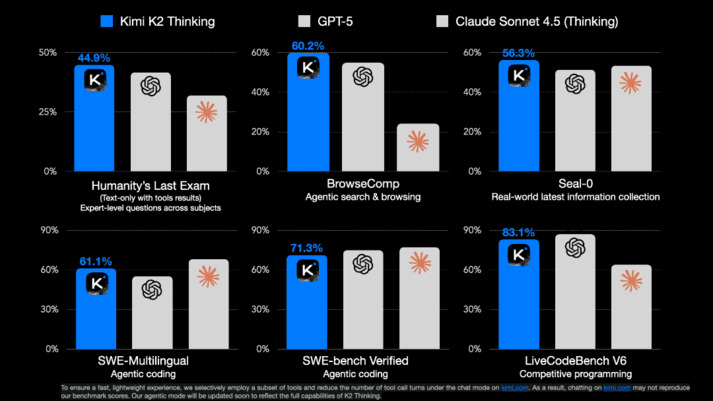
Disconnect between the two giant research efforts is troubling
- America goes all in, with sense of urgency, and seemingly at great cost, to reach yet undefined revolutionary goals
- China is committed to a two-track strategy, supportive of AI implementation at company level today, with public support of technological advance, one update at a time, tomorrow
Faultlines in value creation - the adoption rate
AI effectively is a broad category of technologies and progress is likely to be a complex wave rather than a straight-line ‘winner-takes-all’ race dominated by AGI
What is more, the effects of even the most transformative AI models will be mediated by adoption and diffusion processes—a slow process of adoption rolled out over time with significant delays, as has been the case for every past invention
Actual adoption rates in public and private sectors, in many diverse businesses, will in all likelihood set the pace of AI ‘success’
Aligned with this approach, China’s AI Plus Initiative focuses on industry-specific adoption in the hope to become AI-operational by 2027
How 'diffusion' of AI will play out is unknown - with one incontrovertible evidence, many years will roll by as the productivity gains of AI 'leak' into the supply chains
Many factors come into play
- Human acceptance is the most obvious stumbling block, implying massive efforts to train personnel and to reorganize services
- AI impacts an 'array' of technologies, such as self-driving or robotics in its many guises - progress on multiple fronts will not be continuous but proceed step-wise, at rates often commanded by the laggers
- More complex still could be the interaction between purely digital applications and physical features
Setting aside physical limitations, such as build-out of data centers (and their financing) and availability of electrical power, currently widely constrained, AI will be a slog - or a marathon - but not a sprint
To address the issue raised in the title of this piece, bubbles come and go
Momentum will continue to be driven by the advance of science, but the line of progress will be shagged, never as smooth as promised
Framing technology within human timeframes not only makes sense - it is also respectful of human identity