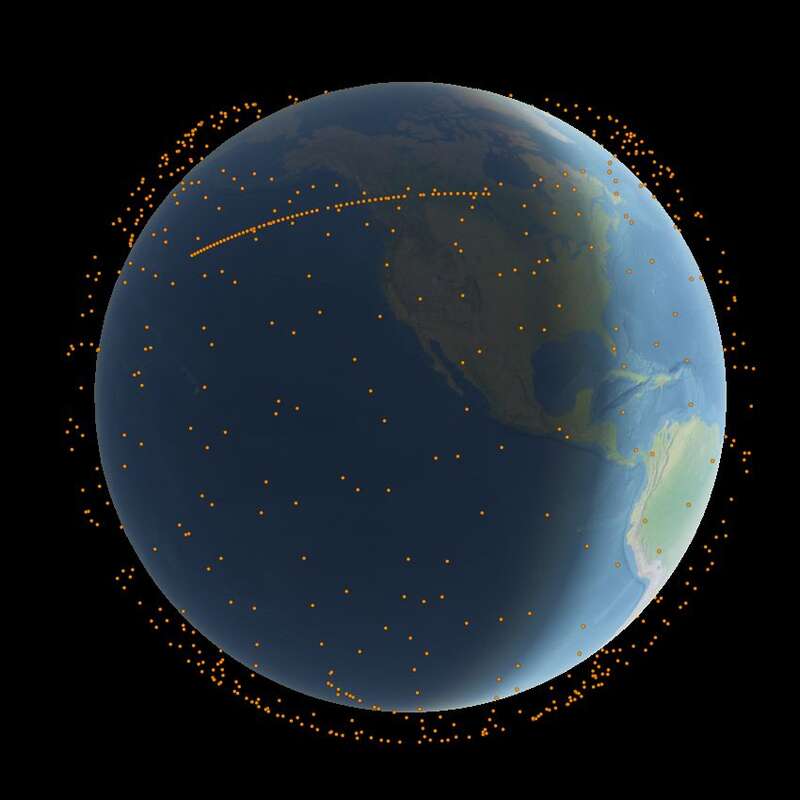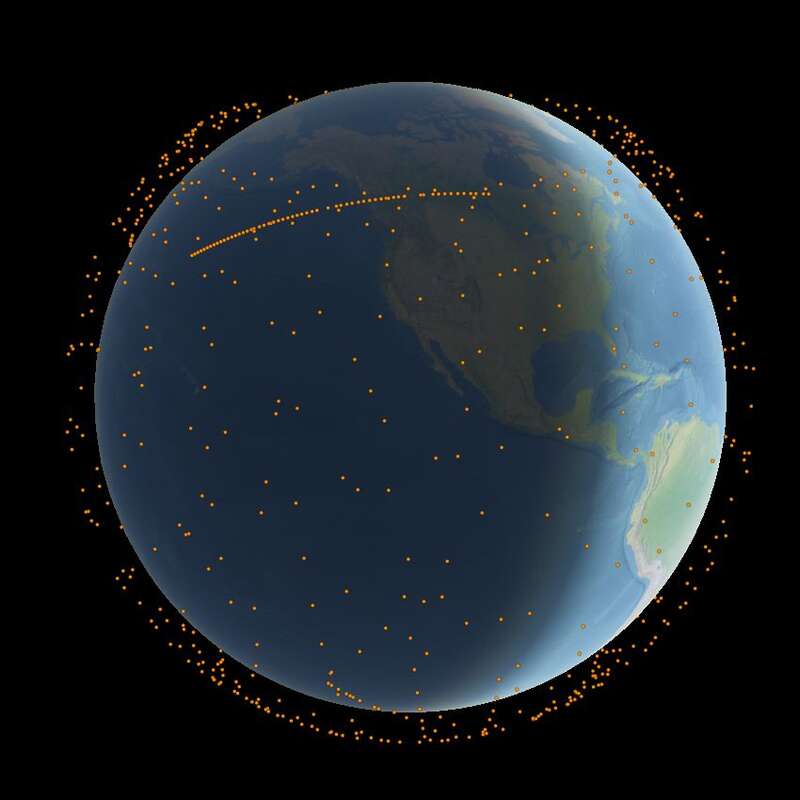
Satellite communications are being upended by Low-Earth-Orbit (LEO) networks, at altitudes from 1,000 kms to 2,000 kms (600 to 1,200 miles), a path-breaking alternative to the familiar geostationary satellites
Far in space, at 22,236 miles (35,786 kms) above Earth's equator, geostationary satellites cover the same region continuously by aligning with the Earth's rotation - the satellites are said to be 'geosynchronous'
According to Satellite Signals, there are 534 satellites in geosynchronous orbit as of Jan. 2021 (up from 448 in Dec. 2018), operated for military purposes (surveillance) and civilian communications (telephone, Internet and television)
Cost and latency (shortening signal delay) requirements of a host of new - often still virtual - services have brought LEO networks to the fore
Sensing vast opportunities, deep-pocketed private businesses are committed to these novel networks - carving out a (mostly) civilian space in what used to be exclusive government-controlled domain
In competition with privately financed enterprise (Space X, Blue Origin, Virgin Orbit, TeleSat Canada, OneWeb), publicly listed companies are in the process of adjusting to new realiites - and to high expectations
Firms with business plans integrating communication services appear to have the upperhand
An encouragement for all the companies in the business of building and launching satellites to follow suit ?