

The tragedy unfolding at the frontier of Byelorussia with Poland and Lithuania has been widely reported
10 000 migrants headed for the European Union are said to be waiting at the border in dismal conditions, lured to Minsk, Byelorussia's capital, on false premises, and victimized
The European Union is holding the high ground with principled human rights, but proves ruthless in its rejection of asylum rights
Nationalistic Poland is happy to make hay of army action in 'holding the barricades' at the Byelorussian border
Propaganda may run wild on all sides but hard politics only make losers...
As events unfold, Byelorussia finds itself at the center of a global tussle, rather than in a regional stand-off with the European Union about 2020 sanctions, following a deeply flawed presidential election
Spinning out of control, the attempt of Byelorussia's President Lukashenka to strong-arm the EU is foundering on a fight for the mineral resources of which the country is rich, involving the world's hegemons, Russia, China, with the U.S. not far behind...
Ultimately, this is all about potash, an essential fertilizer for agriculture, of which Byelorussia is one of only three key producers worldwide (along with Canada and Russia)
The close connection between geopolitics, strategic and economic interests almost guarantees interference by dominant powers, all determined to have their way...
The confrontation of the highly critical West with supportive Russia and China over the 2020 presidential election in Byelorussia has been amply highlighted in recent media comments
Strategic and economic interests much less so…
In fact, restrictions imposed by the EU, Great Britain, Canada and the U.S. on the Byelorussian potash industry, following the election and expanded in June 2021, are rippling through the supply chains worldwide…
The Byelorussian petrochemical industry (8 percent of GDP), potash fertilizers which account for nearly 20 percent of the country's exports, and the financial sector are hard hit but the sanctions brew trouble much further afield…
...in China
According to Chinese customs data, China imported 1.38 million tons of potassium chloride from Byelorussia in 2020 – 16% of total potassium imports by China, which has only limited domestic resources
To secure future access, a $2 billion Slavkaliy potash mining and processing project in Lyuban, owned by the (sanctioned) Russian oligarch Mikhail Gutseriyev and constructed with the support of the Chinese Development Bank (providing a $1.4 billion credit line), was formerly launched in 2015, for shipments expected to start in 2022
Of strategic importance for China’s food security, the entire production of Slavkaliy will be shipped to China for the next 25 years, according to the agreement
European sanctions on the Byelorussian banking sector have, apparently, led the Chinese banks to delay the latest tranche of credit ($103 million) for the project since June, effectively stalling its completion
Even though the project is hardly in doubt, the impact of the sanctions, and the losses in foreign currencies, goes a long way in explaining Byelorussia’s frantic attempt to seek relief by weaponizing migrants in the process
... how about Lithuania
Inviting itself to this game of poker, with human lives at stake, tiny Lithuania showed up as an unexpected player holding a valuable chip…access to its port facility of Klapeida for shipment of the precious potash to China
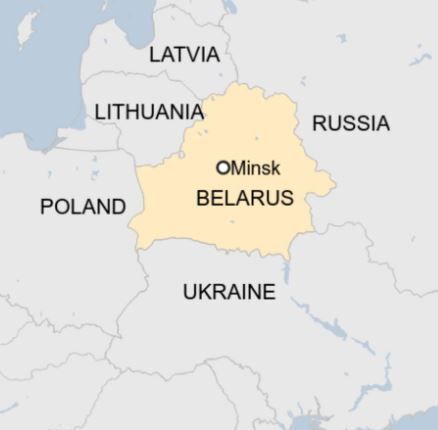
The sanctions, this time issued by the U.S. in August ’21, compelled the Lithuanian Transport minister to put Belaruskaliy potash trans-shipment on hold from December ’21, with no real alternative for Chinese potash imports through Russia, because of necessary transport infrastructure upgrades (and costs)
Lithuania’s decision in August ’21 to open a Taiwan representative office in Vilnius, added another wrinkle to China’s conundrum, making its threats targeting the Baltic state sound somewhat hollow…
...and Russia
Complicating matters still a bit more, the owner of Slavkaliy, Mikhail Gutseriyev is said to be plotting with the Byelorussian president to take over the control of the Russian potash giant Uralkaliy, a tactic which, improbable as it appears, would enhance Mr. Lukashenka leverage immeasurably…
…but putting the Chinese involvement in Slavkaliy in the crosshairs of Russia
Well…unusually, but not unsurprisingly, China seems to take a backseat, in the hope that the battlefield will clear
The present note relies for detailed information about the Slavkaliy potash mining and processing project on the China Brief of the Jamestown Foundation – issue dated November 5. 2021, page 20-26