
In 900 words
Supply chains are global networks of technological expertise
In Japan, and in plain sight, manufacturing expertise is surely the envy of developed Western economies, which were so inconsiderate as to entrust the entire production of critical industrial goods to China's exporters
An industrial supply chain of the kind Japan has many is the true backbone of economic independence
To appreciate how Japan managed to preserve and grow its industrial supply chains, I will be taking a short walk down a memory lane in Kyoto
Work, a form of meditation
As told by Eric Makowitz in Big Think,
"Winding through residential streets of Kyoto, lined with low wooden buildings, I eventually found the small tea caddy shop I had heard about. A simple sign on the door read Kaikado.
According to popular legend, this shop helped inspire Steve Jobs’ design philosophy for the iPhone box. The cylindrical tea caddies here are hammered so precisely that the lid appears to float downward when you close it, sealing with an almost magical sense of inevitability.
Kaikado was founded in 1875, shortly after Japan emerged from centuries of isolation. Its purpose was narrow then, and remains unchanged today: to make tea caddies — chazutsu — that preserve tea at its freshest. The company does not make many things. It has grown only modestly over nearly 150 years. And it remains in the hands of the founding family, now led by Takahiro Yagi, the sixth-generation owner
In the corner of the shop, a young man tapped steadily with a small hammer against a tea caddy about the size of a coffee mug.
He was early in his apprenticeship — though “early” is a relative term here. Kaikado’s apprenticeship lasts roughly 10 years. I was curious what motivated him to pursue this path
The young apprentice told me that the work was a form of meditation
"
Cultural guiding lights are "like the air we breathe in"
When considering the potential of the Japanese economy, the answer of the apprentice in the tea caddy shop will concentrate our attention
A famous line of Edmund Burke (1729-1797) from his First Letter on a Regicide Peace (1796), arguing in favor of total war with the French Revolutionaries, can be quoted out of context (!) because its spirit, the moral and intellectual dimension Burke values in 'culture', still sparkles
"Manners are what vex or soothe, corrupt or purify, exalt or debase, barbarize or refine us, by a constant, steady, uniform, insensible operation, like that of the air we breathe in. They give their whole form and color to our lives"
Manners, good manners according to Burke, matter a great deal because they define customs and mores, they make a 10-year apprenticeship worthwhile and a 150-year quest of perfection in the humble tea caddy relevant
And Kaikado does not stand out, the shop is a natural amongst arts and crafts equally long-lived and equally dedicated
In famed ceramics (Itamari-Arita, Bizen and Kutani), in textiles (such as the marvels of Oshima Tsumugi), in lacquerware, metalwork (renown for Takefu cutlery), wood and paper (with sought-after handmade Echizen Washi paper), tradition perdures and modernity is reinvented
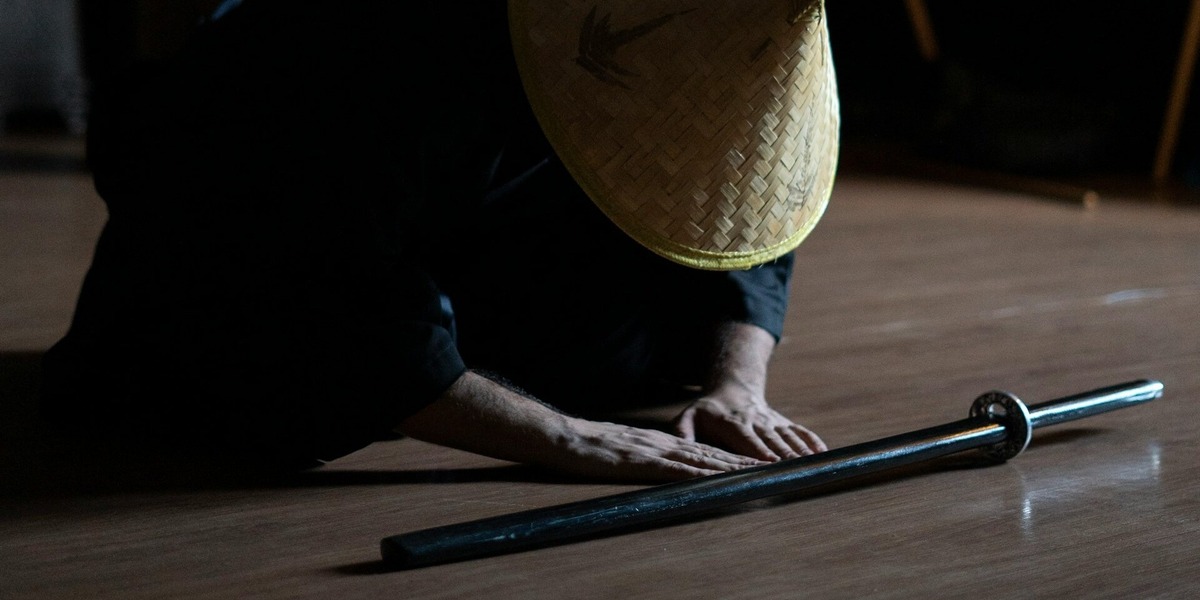
Atop this pyramid of cultural dedication, the katana, Japan’s legendary sword, an elegantly curved and razor-sharp blade, is a symbol of precision, dedication, and respect for tradition, making it a meaningful object for martial artists and artistry
Supply chains with Japanese characteristics
Pyramidal control of the major Japanese conglomerates has played to the strength of manufacturing industries, bent on protecting the domestic market in its early stages of development....and beyond
Financial control with a relatively small stake is a perennial feature of corporate power globally, and following the Meiji Restoration and the push for industrialization, the old family businesses such as the Sumitomo's or the Mitsui's were compelled to break-up the former ways of 'in-house finance'
The zaibatsu pyramidal control, relying on an interfirm network of supply chains, was born early in the Meiji period and flourished throughout Japan's tormented history, until being disbanded by the American occupying forces (1945-1952) under General MacArthur
In post-war Japan
Supported by bank financing, industrial networks were quick to emerge again with intercorporate equity placements to avoid unwanted take-overs
Called keiretsu, those industrial networks were either horizontal interindustry relations between firms with small equity stakes in each other, or vertically integrated, encompassing suppliers and customers of a single large firm, such as Toyota
The "Big Six" horizontal keiretsu (Mitsubishi, Mitsui, Sumitomo, Fuyo, Sanwa, DKB) are deeply rooted in the contemporary Japanese economy, each in partnership with a trading house, or sōgō shōsha, serving as logistical, informational, and commercial hub
And beyond
Taking the long view, I will argue that the industrial strengths of Japan's keiretsu, backed by in-house 'main banks', have taken root beyond the island-country's shores as the presence of their sōgō shōsha trading house partners grew internationally
The investment strategy of the trading houses spun a dense network of approx. 6 000 subsidiaries, mostly by way of minority holdings, across the world
Growing in influence by dint of shared technological expertise and financial power, and taking on an active role in international procurement and finance on behalf of the keiratsus, the sōgō shōsha broadened their focus by investing upstream in their supply chains
Utilities, always an integral part of the supply chains, brought infrastructure investment into focus, on the domestic market and internationally, extending the reach of the conglomerates from equipment to research (such as water desalination) to consumer services
Water utilities are a case in point, with concentration on emerging markets (Middle East, Latin America and South East Asia), where industrialization, urbanization and growing middle classes will fast-track growth
In a long-term perspective, the investment of Berkshire
The sōgō shōsha in Berkshire's portfolio are Itochu
In the name of international diversification
The Japanese stock market cannot be ignored by the Western investor as a proverbial 'known unknown' and Pininvest coverage of Japanese stocks and funds is extensive for a reason
Undisputed strength in robotics, semiconductors, precision machinery, chemicals, automotive, shipbuilding, healthcare and ubiquitous conglomerates is compounded by exposure to the world's most populous and most dynamic region, South-East Asia
- 25 Largest Market Cap listings on U.S. Markets
- Large Cap Listings on U.S. Markets -$10 bn to $45 bn
- Japan Financials - Large Banks and Investment Companies
- Japanese Companies all U.S. listings
- Japan ETFs
For analysis of the Japanese monetary conundrum, check recent notes
- Japan - Indispensable Yen (Dec. 23, 2025)
- Japan - Central Banks and the yen carry-trade (Feb. 3, 2026)