
The hot conflict in Ukraine distracted the U.S. from the diplomatic priorities in the Pacific
However, the relationship between China and the West has lost none of its relevance and, one year on, the Pininvest notes warrant a second look
Testimony to geopolitical continuity, the relation between East and West remains front and center and the rise of China to the forefront cannot be ignored, however much American domestic politics would like to think otherwise
The point of diplomacy is not to support preordained answers to geopolitical issues but to provide a framework for discussion
It would be unfortunate to start 2023 with still less of an already battered framework and no discussion between China and America on shared interests
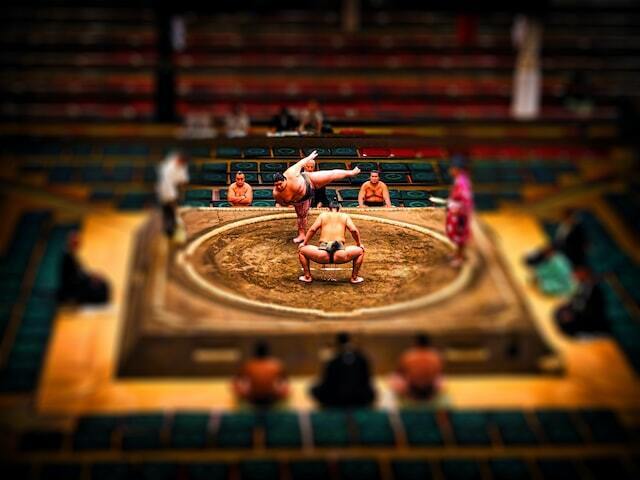
Sumo rituals migh gain in relevance to set the stage in the Western Pacific
Prospects remain uncertain
The geopolitics of Weiqui
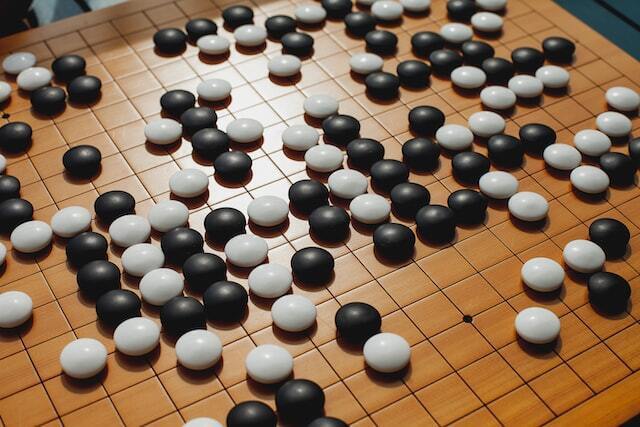
Weiqi is a Chinese board game, continuously played since 2 500 years and better known in the West under the Japanese name variation of 'Go'
It is, according to Wikipedia, an abstract strategy game for two players in which the aim is to surround more territory than the opponent with playing pieces called 'stones'
Discussing geopolitics from China's point of view, the game is of special interest
This is because of the goal pursued in the game, and by China as well, of 'strategic encirclement' of the rival
No less important is the nuanced attention paid to the other party, in an effort to reach a 'fair', 'balanced' and 'mutually acceptable' outcome
The strategies pursued in Chinese geopolitics could be best described by the Weiqi game as relational frameworks build on a number of strands, embedded in each player's way of thinking
These strands can be framed into six elements: goals, threats, means, principles, linchpins and taboos
The endgame can be defined as relative, with ultimately no clear winner and no definite loser, precisely because the interpretation of each element veers fluidly with the optics defining 'gain' and 'loss'
With broad implication and with ambiguity (at least to the Western mind) in East-West dialogue, these concepts have been referred to as foundation of Chinese strategic thought tilting the geopolitics of power in China's favor
In a 'Weiqi' perspective, geopolitical relationships should probably be understood as long-run affairs, seeking balance rather than immediate benefit
They are expected to be mutually beneficial because they prove to be stable but, to be preserved over time, stability must allow for flexibility on either side
This is a paradox, and a factor of uncertainty
In a geopolitical setting, the two players, China and the U.S., perceive the much needed flexibility as transactional...one deal at a time
Transactions do not by themselves secure a stable, balanced, relationship in the long run, not in the Chinese frame of mind but not in the American perception either
The one missing element to secure a stable transactional relationship in the long run is also the most fleeting - mutually accepted legitimacy...
Goals, threats, means, principles, linchpins and taboos
These strands of the relationship between the two super-powers will be familiar in almost any context - globally or in internal political strife
However, from a Chinese perspective, the Weiqui game of 'strategic encirclement' only provides a clear sense of purpose on a regional level
The priority has been for centuries, and continues to be, the securing of guarantees along the vast frontiers of China's continental power
In this respect, the country's diplomatic impulse shows great continuity since the Quing Emperors (1636-1912)
To achieve its purpose, China's diplomacy relied on the legitimacy of its natural leadership, dispensing from the material exercise of dominance
The hierarchical view of world order, putting the Emperor and the Celestial Court at the top, mirrored China's self-belief in its exceptionalism, founded on its advanced civilization and its immense wealth, shared benevolently across the Chinese universe
Chinese strategic thought reflects faithfully Thucydides' fifth-century BC chronicle of the Peloponnesian War
Just like the Greek historian recounted Athenian influence over the Greek city-states during its heyday (430-401 BC),
Imperial Qing and Communist China aim for military, intellectual and artistic accomplishments as well as justice and fairness from their position of power - primus inter pares - in every interaction with 'non-Chinese' entities
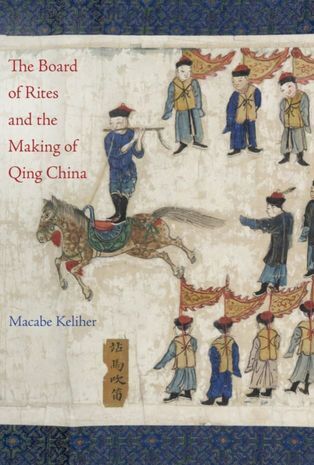
Epitomizing this overlordship, the ties with tribute-paying states, such as Korea, Vietnam and Thailand, were handled by the Ministry of Rites, as part of its all-encompassing spiritual tasks in establishing the 'Great Harmony', essential undertaking in the "Making of Qing China"
China's foreign relations today might well take after these tributary traditions reaching back across centuries, recasting the meaning of Harmony and the expectations of Athenian hegemony in contemporary terms
In the words of President Xi Jinping, reported by Xinhua News Service (Nov. 2014)
"We should promote neighborhood diplomacy, turn China's neighborhood areas into a community of common destiny, continue to follow the principles of amity, sincerity, mutual benefit and inclusiveness in conducting neighborhood diplomacy, promote friendship and partnership with our neighbors, foster an amicable, secure and prosperous neighborhood environment, and boost win-win cooperation and connectivity with our neighbors."
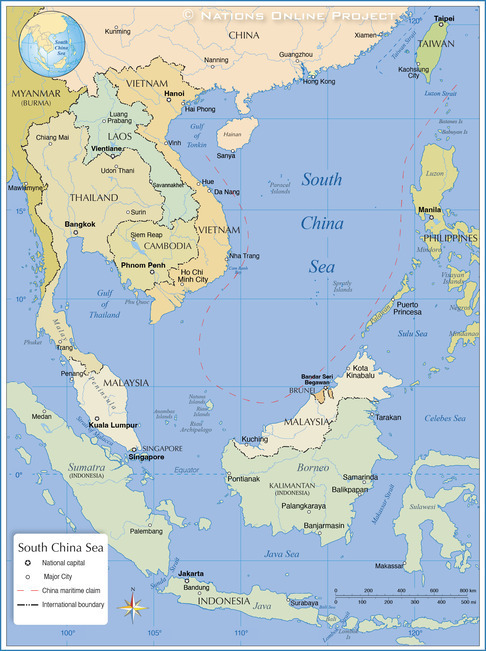
The sense of purpose of the Chinese push across the South China Sea is 'Weiqui' to a fault...and could reenact the ancient tributary system under a new guise...
If - and only if - China manages to convey nuance and flexibility in its quest for regional influence
Nothing is less certain in the face of an unmovable object, America and the American security network in the Pacific
America, the big beast in the Western Pacific
Often painted as a competition between a rising power - China - and a fading hegemon - the United States - facts on the ground look very different
America seems to have played a "Weiqui" game of its own, wittingly or not, since 1945
Its allies - from Japan down along the Pacific rim - recognize America's "military, intellectual and artistic accomplishments as well as its sense of justice and fairness"
So much for Thucydides...
In truth, the United States have prided themselves to be the "new Athens" since the victorious end of WWII and throughout the Cold War...
...even if security on the American West Coast will always be the focus of the Pacific network of allies, ever since the Japanese assault on Pearl Harbor (1941) exposed American territory to Asian aggression
With national security at stake, the confrontation between China and the US offers no room for comfort
In the views of American strategists and military, an island chain draws a continuous line, no more than two hundred nautical miles from the Chinese coast, from the Ryukyu Islands and Okinawa (south of Japan's mainland) along the western seaboard of the Philippines and Malaysia before reversing along Vietnam – rounding the South China Sea
The US is in no position to let go of a single link of the 'island chain' of allies from Japan to the Philippines
Rightly or wrongly, any sign of American weakness could shatter the entire chain
Perceived as a potential threat by China - a risk amply supported by history - the chain has become the theater of confrontation, forever tested in the hope of grinding down the resistance of the adversary
If the military outreaches of the Pacific giants cancel each other out, America will find comfort in the status quo
For China's leadership, the temptation to test the American commitment on the island chain, to push and to shove Sumo-like, will remain strong
But China may find succor in recasting their tributary outreach in many different - non-military - ways, taking a leaf out of the Quing's rule book...
...putting America, compelled to explore new venues for its outreach across the Pacific, on the backfoot