
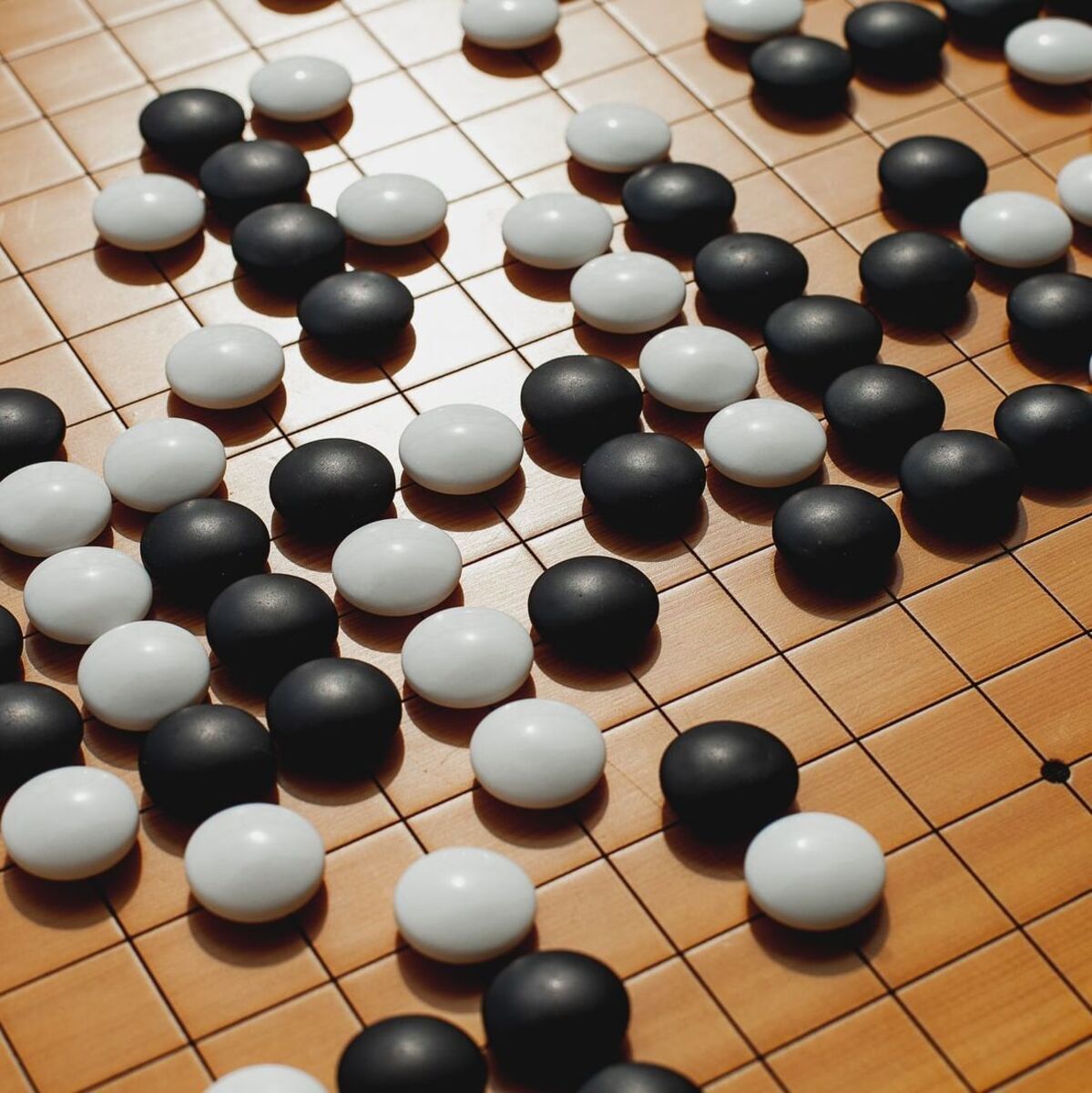
Weiqi is a Chinese board game, continuously played since 2 500 years and better known in the West under the Japanese name variation of 'Go'
It is, according to Wikipedia, an abstract strategy game for two players in which the aim is to surround more territory than the opponent with playing pieces called 'stones'
Discussing geopolitics from China's point of view, the game is of special interest
This is because of the goal pursued in the game, and by China as well, of 'strategic encirclement' of the rival
No less important is the nuanced attention paid to the other party, in an effort to reach a 'fair', 'balanced' and 'mutually acceptable' outcome
The strategies pursued in Chinese geopolitics could be best described by the Weiqi game as relational frameworks build on a number of strands, embedded in each player's way of thinking
These strands can be framed into six elements: goals, threats, means, principles, linchpins and taboos
The endgame can be defined as relative, with ultimately no clear winner and no definite loser, precisely because the interpretation of each element veers fluidly with the optics defining 'gain' and 'loss'
With broad implication and with ambiguity (at least to the Western mind) in East-West dialogue, these concepts have been referred to as foundation of Chinese strategic thought tilting the geopolitics of power in China's favor
In a 'Weiqi' perspective, geopolitical relationships should probably be understood as long-run affairs, seeking balance rather than immediate benefit
They are expected to be mutually beneficial because they prove to be stable but, to be preserved over time, stability must allow for flexibility on either side
A paradox, and a factor of uncertainty, in a geopolitical setting where the two players, China and the U.S., perceive the much needed flexibility as transactional...one deal at a time
Transactions do not by themselves secure a stable, balanced, relationship in the long run, not in the Chinese frame of mind but not in the American perception either
The one missing element to secure a stable transactional relationship in the long run is also the most fleeting - mutually accepted legitimacy...
The'tributary' relations China's Imperial Courts established in the past centuries with its 'near abroad', the countries and peoples abutting its vast expanse, have been set in the relative terms characterizing the relationship between Weiqi players
Not in a position to conquer the many surrounding foreign peoples, China's Courts managed relations with the semi-nomadic tribes in the north and the west (Mandchus, Mongols or Uighurs...) and the national identities in the South (Vietnamese, Thais...) with restraint and confidence of its traditional rituals
Couched as long term interactions with no clear losers while mitigating the potential risks to the Middle Kingdom, relations with independent tributary states recognized the preeminence of the Court with a symbolism preempting hostile acts on either side
A benign environment which did not last....
Described as ‘a game of surrounding pieces’ [in H. Kissinger – On China, 2011], Weiqi as ‘art of strategic encirclement’ might – in a singular reversal of concepts – be a fair description of 150 years of foreign interference, with China on the receiving end
In elementary, even simplistic, terms, on a game board encompassing the entire world, China was most exposed…and losing...
…exposed in the distant past by the Mongol invasions, and since a century and a half ago
- by Russian infringement, gradually tightening its grip on Xin-Jiang, Mongolia and Manchuria (including what was to become Vladivostok) since the 1860’s up to and even after WWII
- by Western concessions, from the mid-19th century, centered on trade (and especially on opium imports) with hard military presence on the ground
- by Japan's wars in 1894, again in 1904, a puppet regime in Mandchuria in 1932 and occupation from 1937
There is no doubt that Western powers did not define their geopolitical forays as a long-term and comprehensive view seeking relative advantage by mitigating the strength of the Chinese opponent, which is essentially what Weiqi is about
Stating the obvious, short-term actions seeking total victory, trade and commercial benefits (if not down-right looting), coordinated with military might overwhelming the adversary, are the very opposite of Weiqi
The mark left on the Chinese psyche by the Western, Russian and Japanese Treaties, dating back a century and a half, is still invoked today
China cannot not have a keen sense of insecurity along its vast frontiers, warranted or not, in exact opposition of America’s sense of invulnerability, behind the vast expanses of the Pacific and the Atlantic oceans
This is how the relationship between China and the U.S. shaped geopolitical instability globally as China's economic power grew
Mutually recognized legitimacy, leaving aside unsolvable strategic issues for a later day, will be the pre-condition of a dialogue preserving stability between the U.S. and China
This rocky pathway will be discussed in our follow-up note - Questions better left unanswered