

Our recent note 'the Geopolitics of Weiqi' argued that the 'art of strategic encirclement' which defines Weiqi can only be played between China and the U.S. with mutually recognized legitimacy
This is because legitimacy makes a 'transactional' dialogue possible, involving a range of divergent interests in politics, economics and trade, social commitments and human rights
The millennia-old Chinese Weiqi board game came to be seen as faithful reflection of China's strategic thinking in statecraft, going back to the Imperial Courts
With its long horizon, its quest for stability in protecting the country's frontiers and its favor for 'tributary' relationships with outsiders, "foreign" affairs were essentially a projection of China's influence
Heavy on symbolism, tributary relations were subsumed uniquely in a Chinese state of mind, rarely (if ever) negotiated compromises
Like any abstract model, Weiqi-inspired strategy is as relevant as it is ambiguous
The relevance stands out against the game of chess which reflects immediacy, battle for the center of the board and a 'winner-takes-all' design
Indeed, chess could be seen as the cultural reflection of Western gunboat diplomacy, barging into a finely - tuned Asian world
The ambiguity of "Geopolitics of Weiqi" resides in a paradox which opens the way to dialogue
In a Chinese perspective, geopolitical relationships are understood as long-run affairs, seeking balance rather than immediate benefit
Because they are expected to be mutually beneficial to a degree, and as long as this is the case, the relationships prove to be stable
However,...to be preserved over time as the balance of power shifts, stability must allow for flexibility on either side of the negotiating table
And this is true of the relationship between the U.S. and China today
A rocky road ahead, fraught with posturing and misunderstanding, a road nevertheless
Traveling down memory lane, Chinese strategic thought seems to reflect faithfully Thucydides' fifth-century BC chronicle of the Peloponnesian War
By distinguishing the legitimated leadership of hegemony from the material capability of dominance, the Greek historian recounts Athenian influence over the Greek city-states
By way of military, intellectual and artistic accomplishments as well as justice and fairness from its position of power, the history of ancient Athens (430 - 401 BC) seemed to revive in Imperial Qing China (1636-1912) - primus inter pares - in every interaction with 'non-Chinese' entities,
The hierarchical view of world order, putting the Emperor and the Celestial Court at the top, mirrored China's self-belief in its exceptionalism, founded on its advanced civilization and its immense wealth, shared benevolently across the Chinese universe
Epitomizing this overlordship, the ties with tribute-paying states, such as Korea, Vietnam and Thailand, were handled by the Ministry of Rites, as part of its all-encompassing spiritual tasks in establishing the 'Great Harmony', essential undertaking in the "Making of Qing China"
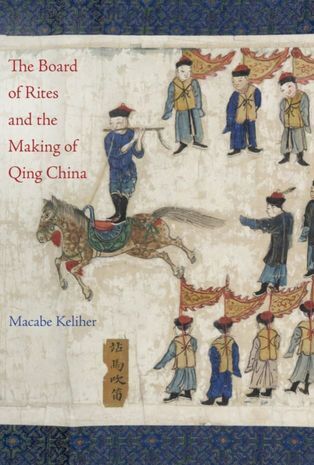
China's foreign relations today might well take after these tributary traditions reaching back across centuries, recasting the meaning of Harmony and the expectations of Athenian hegemony in contemporary terms
In the words of President Xi Jinping, reported by Xinhua News Service (Nov. 2014)
"We should promote neighborhood diplomacy, turn China's neighborhood areas into a community of common destiny, continue to follow the principles of amity, sincerity, mutual benefit and inclusiveness in conducting neighborhood diplomacy, promote friendship and partnership with our neighbors, foster an amicable, secure and prosperous neighborhood environment, and boost win-win cooperation and connectivity with our neighbors."
The confidence on display in this view of China's regional leadership is buttressed by self-assured control over its own borders
In truth, China's Communist Party may own the better part of its legitimacy to this achievement, securing control of the state over its most extended territorial claims...
By asserting principled leadership in its 'neighborhood areas' by free consent, Xi raises the bar, in true Weiqi form, over and above material benefits, into the realm of justice, of intellectual and cultural contributions
In words which a contemporary Thucydides would not disavow, a credible - and long term - commitment to 'common destiny' of all peoples must temper the short-term benefits of power politics
However, China's control over its own borders is not ancient history and a festering sense of insecurity is likely to weigh on the country's geopolitical choices
Fresh from the Communist Party’s victory in the Civil War, in 1949, Chairman Mao was confronted with Stalin’s insistence on preserving the rights benefitting Soviet Russia, negotiated as late as 1945 with China’s previous Nationalist ruler Chiang-Kai-shek, as the price to engage against Japan
Driving a hard bargain which Mao had to accept temporarily, Communist Russia extended its influence in all of the borderlands, from the Western steppes of Xin-Jiang to the Pacific coast was
- from mining and railroad concessions in Xin-Jiang and Manchuria, independence of Outer-Mongolia to Soviet use of the harbors of Dalian and Lüshun (formerly known as Port Arthur) – deep in Northern China’s territorial coast
Mao’s further plans – in 1949 – to reunite Taiwan to the Mainland were upended by the launch of the Korean war in 1950 with the invasion of South Korea by the North Korean dictator
- a quandary for the Chinese ruler faced with U.S. President Truman’s determined (and unexpected) response, linking an engagement of U.S. troops on the Korean peninsula with the ‘neutralization’ of the Taiwan Strait by the Pacific fleet
Because encroachments on China's sovereignty in recent history entertain latent insecurity on its borders, the confidence on display and the country's foreign outreach to validate its legitimacy could remain hostage to the hegemon's material power display
Whatever leverage the projection of force or the threat of force, asserting its material capability to dominate, may deliver, China would almost certainly lose in recognition of its great economic and intellectual achievements
If Thucydides' warning to the Athenians, not to fritter balance, fairness and justice on self-interested pursuits and short-sighted benefits, will be heeded, if the downfall of the imperial city of Athens portends a lesson for all times is a question left unanswered...
With trials and errors, the Sino-American relationship will be seeking a path through a matrix of multilayered issues, political, economic and societal, impacting the interests of each nation in balanced compromise (hopefully)
A tentative matrix of U.S. and Chinese relations will be suggested in our follow-up note "Engaging China - a Roadmap"