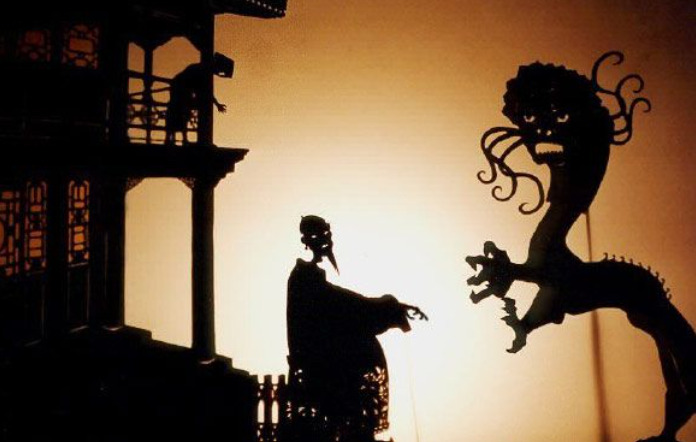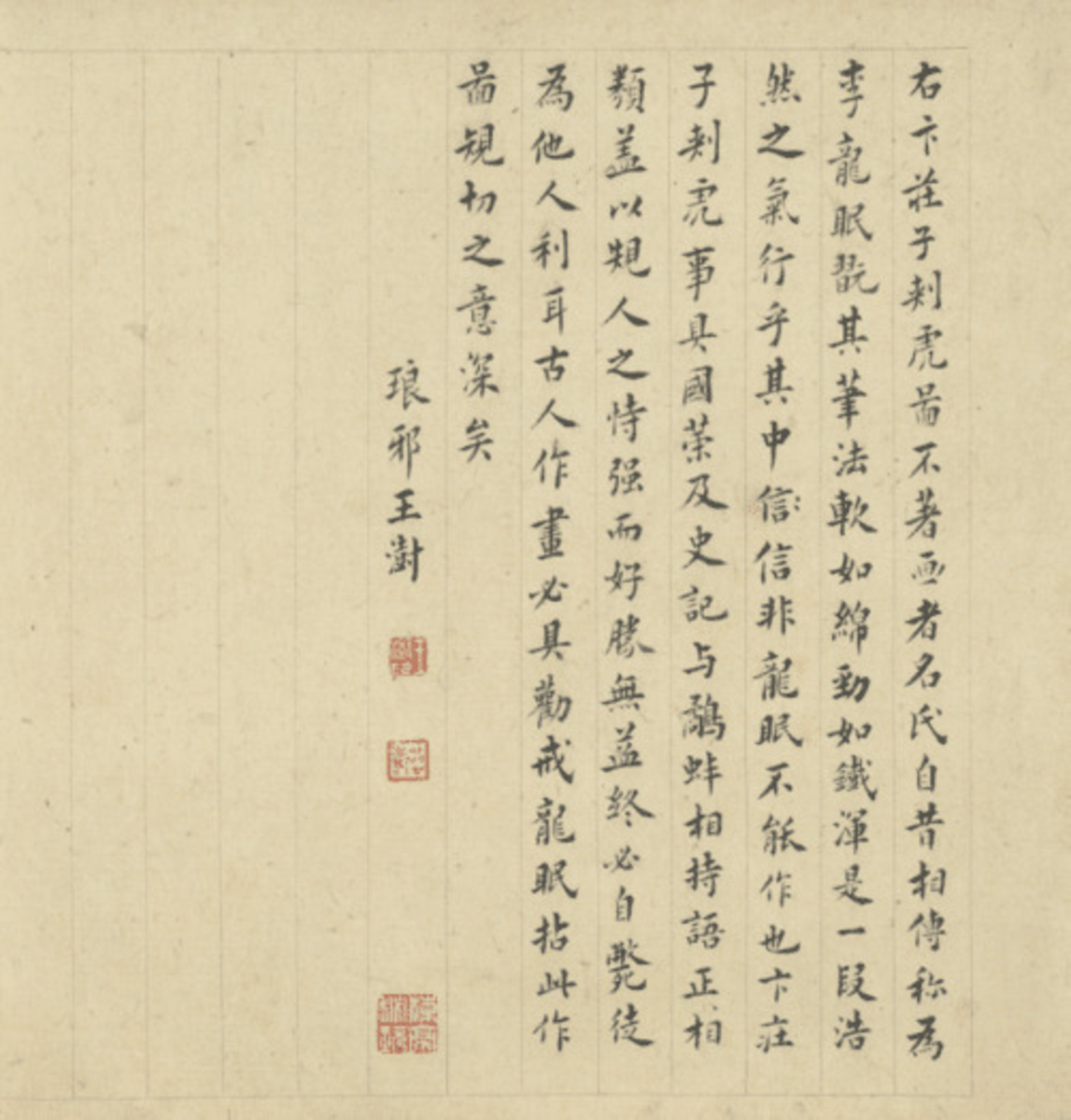
"Sitting on a Hill..."
Taken from The Records of the Warring States, compiled in the early Han period, “Sitting on a Hill Watching Tigers Fight” is the story of Bian Zhuangzi, a Grand Master from the city of Bian in the state of Lu, who lived during the Spring and Autumn Period (770 BCE - 481 BCE) - BCE stands 'Before Common Era'
In the Warring States Period (475 BCE - 221 BCE), the states of Han and Wei were locked in stalemate and the state of Qin was tempted to get involved
Reminded of the tiger fight, with one tiger killing the other before Bian Zhuangzi killed the remaining tiger, as quoted by Confucius in the Analects, written ca. 500 BCE (Book 14), the Qin stayed away from the action until the adversaries were sufficiently weakened to gain an easy victory over both
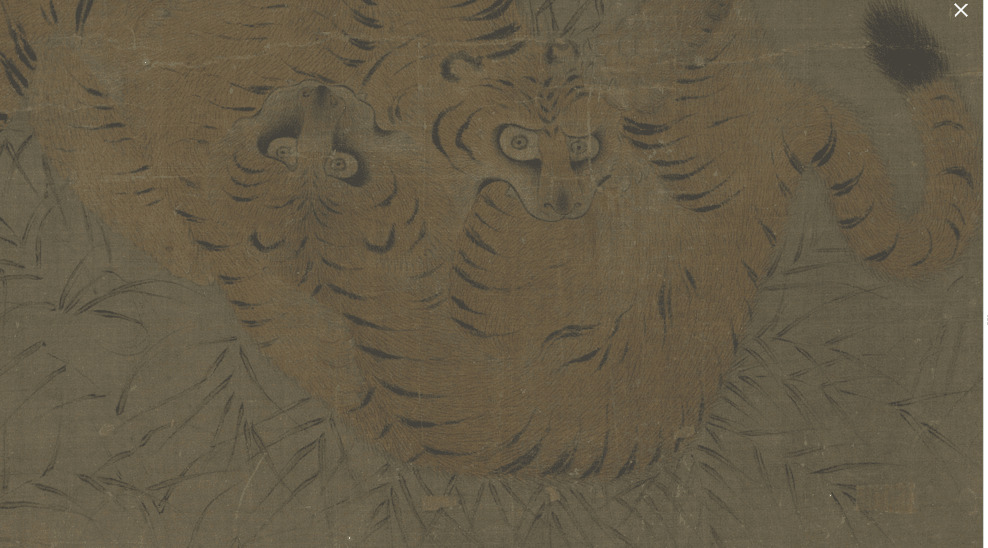
Two tigers fighting in front of Bian Zhuangzi - Anonymous, Song dynasty (960-1279) - National Palace Museum, Taipei
The story remains ambiguous as parables often are and the outcome, when two tigers fight, is not as assured as Bian Zhuangzi's story implies
The tigers may weaken one another but the victor might still prove to be strong enough to take on the one ‘sitting on a hill’
Peace, a question of leverage
Military balance in Russia’s war, and rising expectations of a stalemate on the front in Ukraine, could be seen as lending China some flexibility in its international affairs, especially regarding Taiwan, without drifting into confrontation with the U.S
This outcome would be quite beneficial for China, remaining aloof and confining itself to the role of spectator in the war waged with American weapons
However, assuming a weakened and isolated post-war Russia in crisis, and a reinvigorated NATO, China’s standing in the world will need to be reevaluated
Badly wounded and vindicative, Russia would not be the ally China might have hoped for: the old enmity between the two nations, the Unequal Treaties imposed on China by Russia in the 1850’s, the pressure on China’s Mao for additional benefits after 1949 and the conflict along the Amur River in the 1960's may rumble on in silence, but rumble long memories will
The US and its NATO allies on the other hand would bring home to Beijing a stark reminder of what military engagement backed by powerful economies can achieve, however much Chinese propaganda would wish Bian Zhangzi to be on the right side of history
After making clear nuclear weapons had to be ruled-out, and hardly alone in supporting this stance, it is China’s best interest to provide guidance for Russia’s withdrawal
It is China's choice to come down the hill...and unquestionably, the decision will be momentous
Triangulation is a charm
The argument holds because America's options mirror, in fact if not in principle, China's in this geopolitical balance of world powers – neither one having much interest in a ‘tête-à-tête’ when triangular alliances hold much promise
For China, a mildly reinvigorated Russia, owing much to China, would be a valuable ally guaranteeing safety of its Asian continental boundaries and leaving its military free to concentrate on the sea board
For the US, keenly aware of the demographic realities of Russia, a European country with overwhelming majority of its population concentrated west of the Ural Mountains, a reversal of alliances to NATO’s benefit may not be so farfetched
China, looking forward to the Communist Party’s centennial – in 2049 – is bound to keep its powder dry and its military prowess to ‘shadow theater’, a show which, after all, can be traced back to China's and South-East Asia's millenia-old traditions
And, contrary to common opinion, the US is no different in taking the long view of its global interests...
... maybe even sitting on a "Hill" as well, surely distant from China's redoubt but aloof all the same...
In the world of hard men and ambivalent diplomacy, neither China nor the US have a vested interest in Russia’s full-blown victory or in the country’s devastating defeat
Chances are neither will happen