
Investors of ASML
Is the company's pricing power worth all one expects in a very concentrated semiconductor industry, dominated by 5 manufacturers at best...?
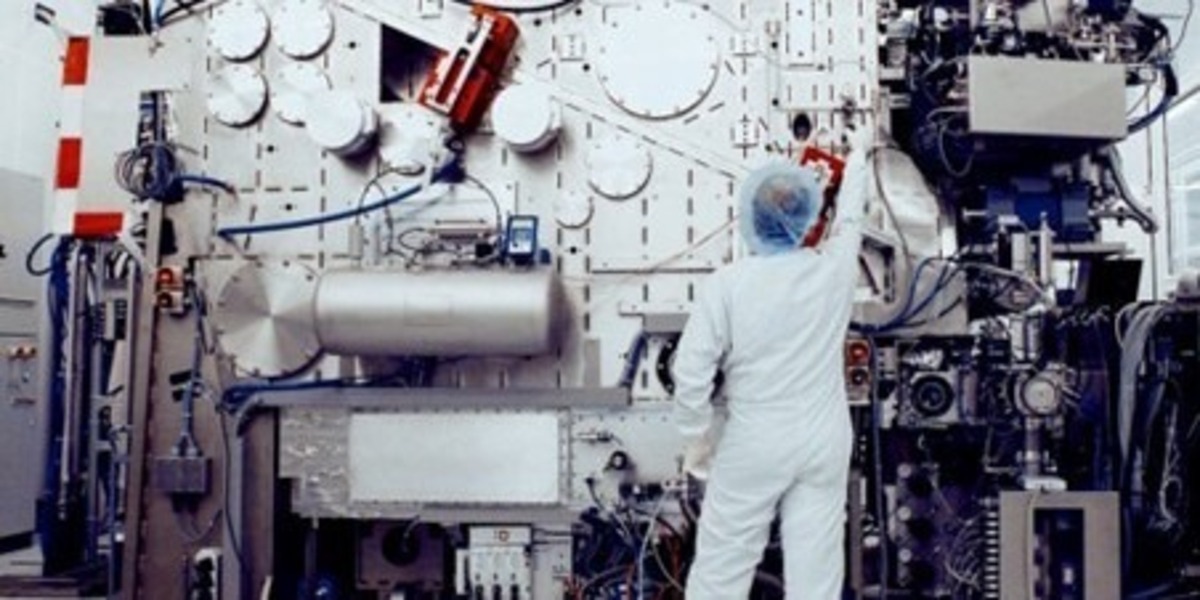
The premise is about to be tested with the latest ASML machine, the High-NA, at a price tag of $380 million per unit, double the cost of the Low-NA, but achieving finer 8-nanometer printing resolutions
TSMC
By upgrading their current ASML Low-NA machines, TSMC intends to stand firm for the next few generations of semiconductors, until at least 2029...or so the company says
The stand-off has very real implications and the subtext is telling for the industry's outlook
With a trailing PE over 50 (compared to a PE of 35 for TSMC and Nvidia
Management believes that the ability of High-NA to etch features up to 66% smaller will lower the cost of patterning, a decisive commercial advantage justifying the higher cost
With a full order book for 2026, in line with 2025 revenues, earnings (E in PE) at the Dutch firm could improve over the short and medium term, supported by two essential factors
- Service : an active base of 5300 lithography systems drives ASML's highly profitable "Installed Base Management" business segment (€8.2billion - 25% of yearly revenue)
- Systems : the ASML order book combines growth potential in advanced EUV etching for long-term competitive advantage and cash generation in DUV photolithography sustained by mature legacy-node demand (automotive and industrial)
ASML's share price may be rich for now but a focus on profitability may surprise by 2027 (or before)
The company can afford to wait it out and so should the investors
For all the excitement around the semiconductors' explosive growth in demand, the cool heads of the manufacturing supply chain focus on a long horizon
With exponential data center demand, TSMC has escaped the grip of one dominant client - Apple
By keeping supply of semiconductors tight, TSMC's pricing power may remain intact for 12 to 18 months, under the realistic assumption that competition (Samsung or Intel
With growth projected by ASML at 20% per year for the coming years, in line with the AI boom, pricing power is key
TSMC felt free to arbitrage the cost of updating their installed machines against an investment in the very latest and most advanced ASML equipment
The sting of competition in TSMC's foundry business may - or may not - hit home by early 2027 - with much riding on the manufacturing success, productivity and pricing strategy of Intel and Samsung
ASML is fully booked in 2026 with a €36 bn to €40 bn guidance, in line with 2025 despite geopolitical constraints on China shipments
Both Low-NA machines and top line High-NA machines have been ordered by the competition of TSMC - Intel and Samsung, SK Hynix followed by Micron and by privately held Rapidus
ASML estimates that, based on current order information, it will deliver 60 Low-NA EUV scanners and 10 High-NA EUV systems in 2026/2027
- Five units Low-NA for Intel and High-NA EUV systems to be confirmed following installation of the first ASML TWINSCAN EXE:5200B in Oregon
- Seven units Low-NA for Samsung and 2 two new production-grade TWINSCAN EXE:5200B systems (2026/2027), after test with a R&D-focused High-NA system at the Hwaseong campus
- 20 Low-NA EUV units for SK Hynix, to be installed in the next two years, all designed for HBM memory and advanced storage solutions, and 2 High-NA EUV systems
- The Micron
order is not yet known - Private held Japanese Rapidus will not be far behind
The Dutch gambit rests on three main pillars playing out through 2027
- Servicing its installed base - 25% of revenue (€8.2 billion in 2025) - a solid earner going forward, with potential to grow
- The most advanced etching (by ultra violet light) machines are coming on line - probable timeline of roll-out : 2026 / 2027, accounting for complexity of productive operations
- Tail wind of strong memory capex demand - with delivery of 60 Low-NA systems in 2026 (+25% on previous year) and plans for 80 systems in 2027 (with very strong SK Hynix and Micron DRAM-related EUV orders for HBM, high-bandwidth memory feeding AI accelerators)
ASML shows remarkable - and huge - confidence in its growth trajectory by preparing to double its foot print in the Dutch Eindhoven/Veldhoven region
The Brainport Industries mega-campus, approved by local authorities in March 2026, is designed to house approximately 17,000 additional employees (+ an additional 3000 jobs in tech-related activities) and will encompass about 100 ha (250 acres) of cleanrooms, production facilities, and offices
Infrastructure (expressways, train connectivity, bicycle paths, parkings) and housing (in public-private initiatives between ASML and 21 local townships committing hundreds of millions of euros) are moving beyond the planning stage
In summary,
ASML's revenue will be resilient through 2027 even with lost sales from China and rejection of top range EUV machines by TSMC
TSMC will be sitting out the first production cycle of the High-NA systems installed at Intel and Samsung
If Intel achieves successful production runs with their TWINSCAN EXE:5200B with competitive prices by 2027/2028
- ASML will gain the upper hand and its earnings will shine in the coming years
- Intel's share price will reward its audacity (as front runner with the High-NA systems)
- Samsung's relative prudence will steal a march on TSMC
- TSMC may need to reconsider its reservations on system pricing but ASML will be hard pressed to fulfill its potential order before 2028/2029
Competition on semiconductor pricing is likely to be postponed, beyond 2028