

"In a crucible" can refer to the literal sense of being within a heat-resistant container used to melt metals or materials at extremely high temperatures, or it can be a metaphor for a severe test, a challenging trial, or a situation where something is forged or transformed under pressure
In Arthur Miller’s renowned 1953 play, The Crucible is an allegory about the anti-Communist government witch-hunts of post-war America, wrapped up as a re-telling of the Salem Witch Trials of 1692
Taking the heat, NATO, for better or for worse, also is in a crucible
- The commitment of the Alliance to peace by show of military force is severely tested,
- Its credibility is wavering under the crumbling symbolism of Article 5,
- Its military strategy of engagement is outdated and outrun on the Ukrainian frontline,
- And its collective political support is losing traction in a dispute about dollars and euros…
Stressed and facing an uncertain future, the Alliance might benefit from a root and branch overview, establishing the political engagement between allies on fresh foundations and projecting the military strategy into potential conflicts
"Raison d'être"
In broad strokes, the issues challenging NATO's "purpose for existence" are incontrovertible
- war in Ukraine is not the war-analysts expected when Russia invaded the country and not the type of war NATO prepared for and might have expected to fight
- in the confrontation, adaptability to technology evolving at lightning speed has become a major factor of military tactics
- the ranking of weapon systems is upended by military communication technology, resetting priorities in defense hardware investments
- the ability of the military-industrial complex to adapt will be a trial-by-fire for establishments not known for their light-footed imprint
NATO has to confront fundamental questions about the ‘raison d’être’ of the Alliance but, in a singular reverse burden of proof, credibility of the U.S. armies in Europe reflects on their combat readiness on the Pacific theater
Any pronouncement about ‘what comes next’ for NATO will be flawed and subject to criticism, even under the optimistic assumption that some of these considerations might stand the test of time
- NATO - The meaning of Article 5
- NATO - Pick your umbrella before the rain...
- NATO Spending - Golden promises or tin coins ?
- NATO - Domination of machine over men ?
Conjectures about NATO's future strategy will shine a somewhat contingent but realistic light on the military challenges at hand
Lessons drawn from the dismal failure of the Russian military in the initial stages of the Ukrainian war, 2022-2023, have had great relevance for the U.S. army
The Ukrainian successes on the battle field have been studied extensively, but the organizational failures of the Russians hit much closer to home
This is because the drivers of structural weaknesses in the Russian army are similar to the factors which metastasized the U.S. command posts close to frontlines into unwieldy nerve centers
Layer upon layer of material tools and design, demanding "decision-quality" information at all times, turned the command posts into lumpy targets exposed to electronic, artillery and drone attacks, at the expense of survivability
Choices of strategy dictated by topography and industrial potential still are reassuringly familiar, but, close to the front line, tactical capabilities of the military "command and control posts" need to find the balance between digital effectiveness and protection
Conjectures about the format of future warfare are wrapped in a dilemma
Technological innovation in military planning
Structural preparation for a war (that may never happen) were honed over decades and aligned with command-and-control structures going back to … the Napoleonic wars
Requiring close collaboration with defense industries, mobilizing ever more powerful weapon systems and massed armies, long-term military planning has depended reliably on deep organizational experience
By challenging tried-and-true planning processes, rolling technology innovations present a dilemma
On the one hand, prudence and realism commands incremental adjustments to the known, updating the defense organization with caution
But on the other, technological break-throughs are real and the speed of innovation is also real, projecting an array of unknown military options
With the promise of a new reality, on-the-fly technological system innovation, integrated directly on the frontline, has been generating legitimate excitement about devastating efficiency and limited human exposure to harm
However, the war in Ukraine remains a balancing act, circumstantial and pragmatic in the mix, but for NATO, inconclusive....
A performative defense industry on a war footing
Looking past the initial fumbling and disastrous show of incompetence, the course correction of the Russian army on the frontline has been sharp and effective
Even more spectacular, the Ukrainian forces demonstrated versatility in testing and adapting technological innovation on the fly
For NATO's structural overhaul, both achievements imply lessons to un-learn, regarding withering industrial investments, and lessons to be learned, in technology integration
The ability to set the industrial complex on a war footing is a decisive advantage, demonstrated, one more time, amply and convincingly, by the pivot of the Russian economy to war
For NATO allies, willingness to commit to binding purchase orders, planned over extended time periods, will presumably be critical
The call is out to secure the investments to rebuild the production capacity of the defense industry, after decades of relative neglect
The pivotal role of industrial potential in mass production of advanced weapon systems is highlighted in real time by Ukraine's limitations and Russia's success
- The latest breakthrough in drones' technology, guided by fiber optics and unjammable, has been experimented by both adversaries.... but volume production has given a decisive advantage to Russia for now
- Similarly, missile technology has been shown off by Ukraine but potential performance remains uncertain, and current production cost ($1 million) and volume (1 per day) highlights the country's industrial constraints
The "command and control" tech challenge
Because of fast evolving technologies, organizational challenges are mounting on the frontlines
- Digital networks, supported by cloud connectivity, offer high-quality information to support split-second decisions
- Making itself indispensable, technology is taking an ever larger part in defining the requirements of the military organization on the front
This is why structural reform remains hard to implement at NATO
- Over the past decade, with the fight against terrorism the primary concern, command centers could expand to take on the best of communication systems and data access - without real vulnerability to attack
- ...and they are vulnerable now
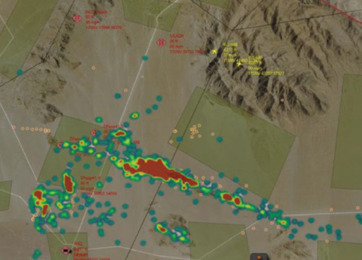
- Ported in a war setting, such organizations reflect the complexity and scale of war, aiming at combined employment of capabilities from multiple echelons - a challenge communication technology and AI is set to meet
- However, high effectiveness in decision processes exposes the command posts to considerably increased vulnerability and, potential lack of agility due to data overload
Russia made the case early on in the early days of 2022
To step away from over-networked command posts and to regain flexibility and survivability on the front line, the true cost of technology for technology's sake has to be pondered
With the early adoption of communication technology in its multiple formats, the command posts may have drifted in an evolutionary mode, under the guise of ever more advanced tech performances
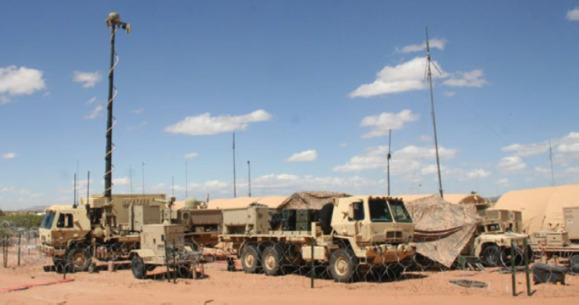
Ultimately, a break from outsized command posts, lacking agility and endurance in lethal conditions, will define what technology can - and what cannot - be integrated
- The effectiveness of tech driven solutions should not by themselves determine how the structure of the combat units evolves
- All the same, new found tech capabilities will be critical in the incremental integration of new weapon systems – as the air force, the space force and the new cyber force have proven again and again
The dynamics on the Ukrainian frontline have relied on novel use of weapon systems, benefitting from fast evolving technologic advance, leaving as many questions as provocative answers
Now is the time to 'write the song sheet', bringing together a revigorated defense industry, agile tech communication and combat units structured for endurance
This briefing sets the stage for the massive challenge awaiting European nations decided to take the defense of the continent seriously
Questioning and reforming the 'old' ways, military preparation for war is indispensable, but fortuitous and dependent on the human dimension