

The International Energy Agency (IEA) is ringing the bell – in "the first truly global energy crisis" according to its Executive Director Fatih Birol
Meanwhile, harking back to the good old days of Western market dominance...
...and just a week ago, at the October 25 meeting of the 26 EU members, the European proposal to regain control over natural gas markets went nowhere...
For very good reason
Two factors stand out
- This year, reserves in Europe had been topped up early on and large LNG shipments were redirected from Asian destinations
- 2023 looks very different - foregone natural gas shipments of at least 100 bcm out of Russia (and maybe a lot more) could be very hard to substitute and reserves will be low after the winter months
- The European Commission plays down the fact that its member countries have been the smaller players (115 bcm - 23% ot global LNG imports in 2020) with little say until now (Russian gas was so much cheaper....).
Barreling into the club of most Asian natural gas consumers (345 bcm - 70% of 2020 global LNG imports) will not be so easy
Natural gas import / export is measured in billion cubic meters (bcm) - 2020 data by BP Statistical Review
Slapping a band-aid on the European Internal Market
The Commission's effort to lign up the members under a common framework must be put in context
- Energy policy is a key component of the Internal Market, allowing European countries to compete on a fairly even footing
- If the EU members are out competing one another to secure gas in 2023, the demise of the common Energy framework will be final
And it is already happening....
Again for very good reason
- Natural gas consumption vary enormously between EU members - hogged by Germany (86.5 bcm), Italy (67.7 bcm) and the Netherlands (36.5 bcm) - and more modestly by France (40.7 bcm) and Spain (32.4 bcm)
- Critically, and because of favorable access to Russian pipelines, Germany and the Netherlands did not rely on LNG and Italy for less than 20% of its consumption
- Spain and France smell like roses (under the circumstances), relying respectively on 75% and 50% of their gas imports by LNG
So it is...battlelines are drawn, whatever the EU commission might hope to achieve
The Commission, which is the executive branch of the Union, attempts to set out a strategy of common purpose, side-stepping ‘go-it-alone’ tactics of member governments to secure gas procurement
This is why the Commission has been seeking approval for a price limit on trades at the Title Transfer Facility (TTF) Dutch gas hub
Setting price limits in a sellers' market
The EU executive would "as a last resort" propose establishing a market "dynamic" price at which natural gas transactions can take place in the TTF spot market under specific conditions (if prices spiked)
The measures should not affect security of supply, nor lead to an increase in gas consumption, nor affect the orderly functioning of energy derivative markets, the draft said.
Lasting for no longer than three months, other EU gas trading hubs would be linked to the corrected TTF spot price via a dynamic price corridor
Ideally, the price limit would aim to equal and fair competition within the Union, a central purpose enshrined in the Energy Directives which have governed EU policy
In a sellers' market, where supply sets the terms, consumers might hope to strengthen their options by banding together
Commanding just 10% (380 bcm) of total world natural gas consumption (3 823 bcm), the European Union's attempt to stabilize the gas market looks optimistic at best...
It does not seem to work out that way
Hardly alone on the world market
According to the IEA (International Energy Agency),
"If Russian pipeline supply is completely cut, EU gas storage would be less than 20% full in February '23, assuming a high level of LNG supply – and close to 5% full, assuming low LNG supply"
To build up reserves in Europe after the winter of 22/23 with non-Russian gas, every EU member is going after potential imports, and probably out-bidding one another in the process – precisely what the Commission wants to rein in (and has not managed yet)
Presumably, the largest global gas importer – the Asia-Pacific region (approx. three times the EU gas consumption by LNG at 345 bcm) – has not been appreciative of the resulting market disruption this year
As late as 2020), 70 % of LNG imports worldwide went to Asia-Pacific and just 23% to Europe (115 bcm)
Weak demand following China' economic slowdown this year has freed supply, opportunistically redirected to Europe
Brightening 2023 economic conditions in Asia, with China in the lead, might well reverse LNG flows back to their primary contractual markets – and away from Europe
European interference with market prices, planned by the Commission, could easily become a case of presumptive overreach
Simple arithmetic
The hole left by the missing Russian natural gas bcm’s is impossible to plug
LNG capacity is expected to add no more than 20 bcm in 2023 according to the IEA
Back in 2020 (BP data), Russian gas exports of 238 bcm landed
- mostly in Europe (70% of total) - 184 bcm
- in China by the new Power of Siberia pipeline – 16 bcm, est.
- in Asia (China, Taiwan, South Korea) by LNG shipment – 22.5 bcm
- and approx. 15 bcm in other destinations
Gas not shipped to Europe has (almost) nowhere to go…and will be missing for global consumption
The natural gas market is dependent on infrastructure
Pipelines, LNG transport, and LNG gasification and degasification stations (upon arrival at destination) offer none of the flexibility of oil shipping
…making it very likely that supply of imported gas, worldwide, will be skewed by a short fall of at least 100 bcm of gas (or maybe more) NOT shipped to Europe in 2023
The latest chart of IEA gas exports by the four major producers - the US, Qatar, Australia and Russia - reveals almost picture-perfect stability, promising at best a 20 bcm global increase in 2023 over 2021
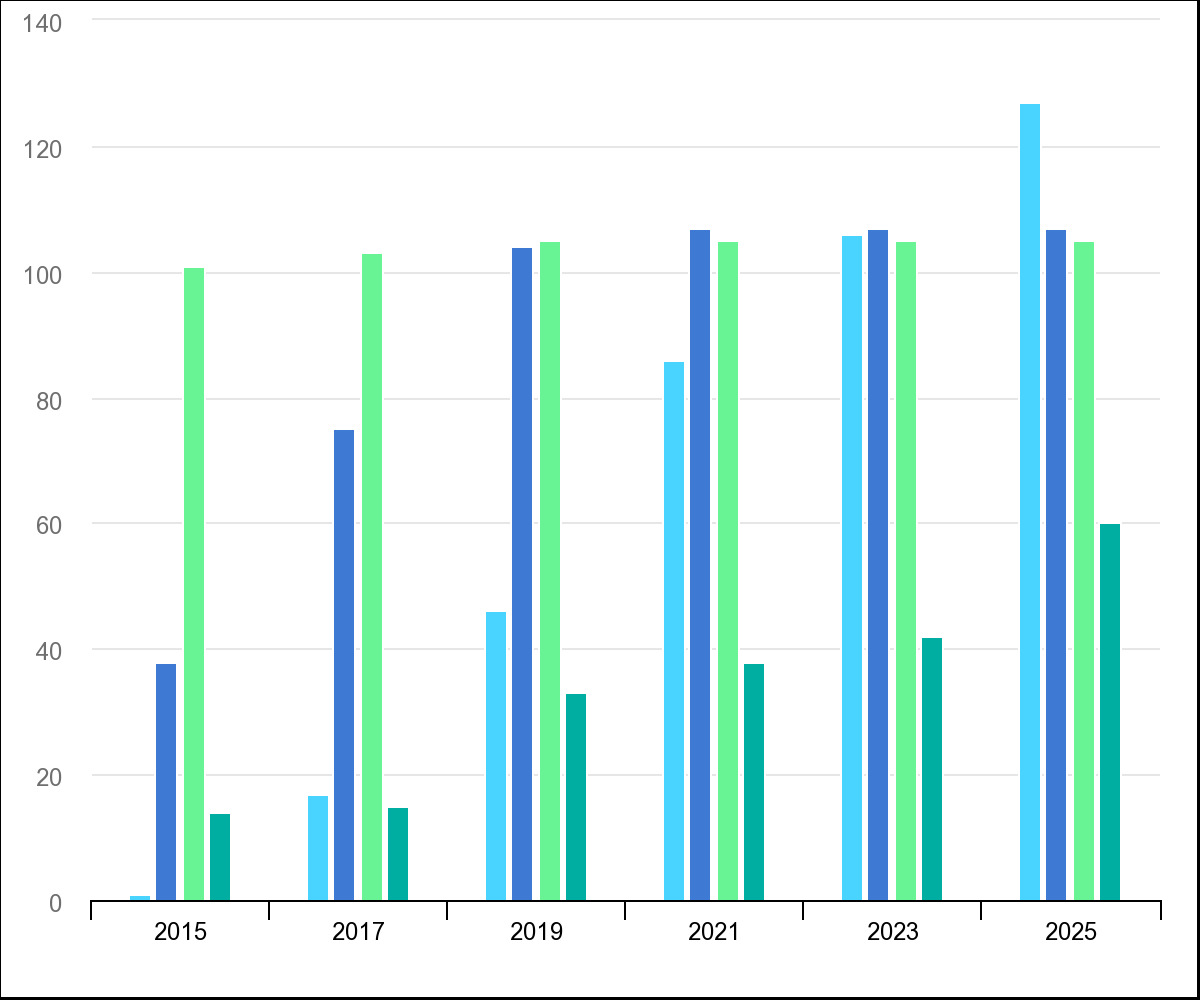
…even with new LNG stations coming on line in 2023 and fully operational in Europe by 2024, some things do not change
Infrastructure investments - at the source by providers, along the sea journey by LNG shipping companies, upon arrival by energy importers - have always been, and remain, long-term commitments
Through the looking glass, darkly
Qatar's Minister of State for Energy Affairs and President and CEO of QatarEnergy, Saad Al-Kaabi, did not mince his words in a Financial Times interview published on Oct. 18, 2022 and reported by the Iranian agency Fars
- If “zero Russian gas” flowed in to the EU, as Brussels intends, “I think the problem is going to be huge and for a very long time”
- “You just don’t have enough volume to bring [in] to replace that gas for the long term, unless you’re saying ‘I’m going to be building huge nuclear [plants], I’m going to allow coal, I’m going to burn fuel oils’,”
And, to cap his dark warning, Saad Al-Kaabi expressed concern about losing the EU market in the future because of its larger goal of moving away from fossil fuels
- Europe needs to “get off the discussion that gas is not needed for a long time”, he suggested, “because everybody who’s going to invest in the gas sector, will be looking at 25, 30, 40-year horizons to invest and to get reasonable returns on the investments.”
Nothing more needs to be added...
European supply in 2023 / 2024 might balance demand by pricing industries and poor consumers out of the market
But...like the minister said "the problem is going to be huge and for a very long time"