
The Asia-Pacific Economic Cooperation (APEC) meetings are about to conclude with the Leaders Meeting in Shenzhen, China (November 18-19)
APEC participants include representatives of all nations around the Pacific Ocean
With the encounter of Presidents Xi Jinping and Trump, the risks of 'hard' confrontation and the opportunities of cooperation in shared 'soft power' initiatives come into focus
Societal priorities in Asia at large, including the Indian Subcontinent, should frame official commitments for years to come....but will they ?
'The Pacific rim, skirting China’s borders, is at the heart of the U.S. – China confrontation and Taiwan is presented as main focus of a risky powerplay
Though a potential recipe for disaster, Mao Zedong's strategic patience regarding the break-away island has yet to be tested
Chairman Mao's admonition - "China could wait "a hundred years" to resolve the Taiwan question and achieve reunification" - stems from 1975....
For America, the countries qualifying as allies, from Japan to Malaysia, define the 'first island chain', the first line of defense of the U.S. West Coast, within reach of intercontinental missiles
For China, Taiwan qualifies by right as part of the mainland and remains a much sought-after achievement for the Chinese Communist Party (CCP) to settle scores with the former Nationalist regime of Chiang Kai-sheck
Even though reunification is a primary goal for the CCP, it is the break of the island chain which would compound the shockwaves upending Taiwan's democracy
While the projection of China’s power across the Pacific would be most attractive to the Chinese regime, the unpredictable consequences of unsettling America as well as its closest allies may just be 'a bridge too far'
The two nations’ interests are broad and reach well beyond the South China Sea (which China very much would like to recognize as its own...)
Not one of Asia's majors, and perhaps foremost on the Indian Subcontinent, could afford neutrality if this highest stake - but slow-motion - confrontation were to play out...
The outcome cannot be foretold, but ultimately, it is the projection of a mix of hard (military) and soft power which will be decisive across Asia
- Integrity of the 'island chain' requires close American coordination with its regional partners in defense, foremost with Japan (as well as Indonesia and the Philippines)
- Chinese initiatives projecting 'soft' power in the region will be as relevant as the closely observed military operations to challenge the U.S. hold
- It is up to the U.S. to devise soft power policies of its own, countering Chinese influence with alternative - or complementary - action in the interest of the greater region
By signaling their determination with a diverse range of 'hard' and 'soft' initiatives, the U.S. and China may tilt the balance and affect the outcome
From an American perspective, steadfast 'hard' alliances, such as with Japan, need to be reasserted and cautious neutrality of countries most exposed to China's regional economic dominance might be drawn-in by soft power strategies
Demographics and explosive climate risks across Asia are the most weighty societal issues, now and for years to come
By challenging China and the U.S. to a collaborative path, and by leveraging governmental and non-governmental policies across the board, the issues open a large array of soft power initiatives
Raising awareness, showing commitment and sharing costs, American 'soft' participation may reassert U.S. engagement in ways defense policies alone cannot...
I will argue that, by acting with 'hard' persistence and 'soft' moderation across Asia, the U.S. might assist Asian countries in pulling-off an indispensable balance act between China, ever present in their economic backyard, and an all-too-often swaggering America
Power, hard and soft
Playing for high stakes across the Pacific, the U.S. and China know that a successful projection of power must be multifaceted
Military muscle as manifestation of control and as guarantee of security cannot be left to wither, even marginally, at the cost of losing credibility
However, the perception in countries across the region of positive influence by various actors, not just governments, has been shifting the balance
Defense translates into measurable commitments to military hardware, in bilateral relationships, skewing perceptions with a sense of security which may actually prove elusive in the fog of war
But in a competition with the adversary, an array of non-lethal factors sets out a wide framework of soft power, addressing demographic and climate change, associating all the regional actors, whether friendly or hostile or neutral, and involving not just governments but transnational companies and regional organizations....
...a Marshall Plan 2.0 with hands stretched far and wide...
Interconnected drivers
The framework reminds government officials of the boundaries on the political power they deploy in the national interest
Interdependence is everywhere, in global trade and finance, in communications, in technological leadership, in economic resilience and human aspirations, giving an entirely novel meaning to ‘power’
Interdependence defines how soft (non-military) power is sustained, beneficially or adversely, within the wider region, in ways reflecting each country’s exposure to economic and financial flows, communications networks or societal sensitivities
Global challenges
- Demographics
- Climate change
- The United States, searching for soft power with Asian characteristics
Demographics
Demographics have a defining impact on millions of lives in South-East Asia
Totaling 700 million, from Myanmar to Vietnam, by way of Indonesia, Thailand and Cambodia to the Philippines and Malaysia (compared to US population of 342 million), South-East Asia is at a critical juncture
Indonesia, Malaysia, the Philippines, Thailand, and Vietnam (collectively the ASEAN-5) account for more than 84% of gross domestic product (GDP) and 87% of the population of the Association of Southeast Asian Nations (ASEAN), leaving aside Cambodia, Laos, Myanmar, Brunei and Timor Leste (as well as financial powerhouse Singapore)
| Population estimates in '000s | % change | ||||
| 2018 | 2022 | 2026 | % of total SEA-5 | 2026 | |
| SEA-5 | 572,015 | 596,938 | 621,637 | ||
| Indonesia | 267,264 | 276,270 | 287,887 | 40.87% | +0.76% |
| Philippines | 106,778 | 116,335 | 117,724 | 16.71% | +0.80% |
| Vietnam | 96,651 | 98,486 | 102,177 | 14.51% | +0.57% |
| Thailand | 69,208 | 71,746 | 71,559 | 10.16% | -0.08% |
| Malaysia | 32,114 | 34,101 | 36,385 | 5.17% | +1.13% |
| Singapore | 5,805 | 5,993 | 5,905 | 0.84% | +0.6% |
|
South East Asia total |
655,636 | 684,602 | 704,315 | ||
| China | 1,421,864 | 1,425,887 | 1,412,910 | -0.23% | |
| India | 1,374,659 | 1,420,000 | 1,476,630 | +0.87% | |
| Pakistan | 259,300 | +1.60% | |||
| Japan | 122,428 | -0.55% | |||
| United States | 349,630 | +0.51% | |||
| Russia | 143,394 | -0.42% | |||
| Source - World Population Review |
On average, nearly one-quarter of ASEAN-5's population is under the age of 15, a key strength for the next decades as the populations of East Asian industrial and economic centers - China, Japan and South Korea - are aging rapidly
Excepting Thailand, which is rapidly aging as well, ASEAN countries' geographic proximity with these advanced economies will encourage labor mobility to address demands in the region, across a wide spectrum of skill levels
Contributions to the educational system and to vocational schooling will be required to realize the full potential of ASEAN's demographic advantage - presenting the greatest opportunities to deploy soft power
In the current transition of AI adoption, automation will challenge the cohorts of young workers, requiring investments in reskilling at entry levels, involving potentially tens of millions of workers
The cost of failure to meet these educational challenges would translate in sharp inequality within and between Asian countries, resulting in regional instability
By targeting this ambitious agenda, in the interest of all more developed and aging societies, East as well as West, soft power might be deployed most convincingly
On the ground, hard facts may preempt thoughtful policies....on education or other societal benefits....
Geopolitics remain pivotal in the East-West future and competing influences of the U.S., China and India, eager to align the South-East Asian countries with their own interests, stress and constrain national options
By their sheer magnitude, cumulative populations of the Indian subcontinent giants, India, Pakistan and Bangladesh, at 1.913 billion, retain the potential of throwing all of Asia in disarray, surpassing China's population by 500 million people
Climate change
Global warming might force targeted programs on shared agendas precisely because its globality is undeniable, putting the onus on the biggest carbon polluters in the wider region and around the world
Scientific research and polluted cities are not an every-day inconvenience anymore, but a looming danger for the well-being of millions of people
Worsening at fast pace, the climate crisis is Asia's tragedy
Long suffering Pakistan
According to UNICEF, the 2022 historic floods in Pakistan submerged one third of the country, affecting 33 million people, half of whom were children. The floods damaged most of the water systems in affected areas, forcing more than 5.4 million people to rely solely on contaminated water from ponds and wells.
The 2025 monsoon season brought intense pre-monsoon rains, cloudbursts, and Glacial Lake Outburst Floods (GLOFs) that killed over 1,037 people and injured more than 1,067 nationwide.
And last week, November 9, 2026, a severe flood risk has emerged in northwestern Pakistan due to a tunnel breach and protective barrier collapse at the under-construction Tunnel-5 (T5) hydropower project at the Tarbela Dam
Brutal emissions - coal and oil
A dramatic trend - Asia (East, South and West) is on the firing line
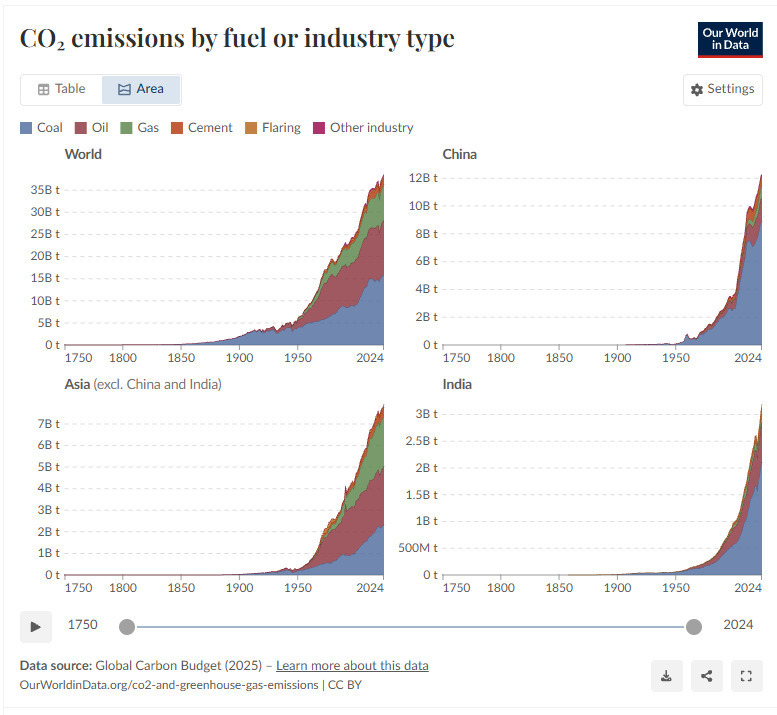
The benchmark of CO₂ emissions - in billion tons per year - puts Asia (and the developed world) on notice
Since 2000, the year of China opening to international trade, emissions are out of control
- in 2000, Asia (including India) contributed for one third to world emissions (9.33 billion tons, 36%) - by 2024, the contribution of Asian countries doubled in % (61% - 26.4 billion tons)
- the 14 billion tons rise in emissions can be sourced to China (almost 9 billion tons), rest of Asia (3 billion tons) and India (2 billion tons)
- the increase in Chinese emissions - 240% over 2000-2024 - showed no sign of abating, besides the temporary slump due to the crisis in real estate and Covid shut down, until now...
A silver lining ?
- the findings of a respected Finnish think tank, the Centre for Research on Energy and Clean Air, have recorded a drop in Chinese carbon emissions by 3.1% year on year in the third quarter of 2026
- structural factors, the spread of electrical vehicles (over half of car sales in China) and improvements to the electrical grid for effective distribution of renewable electricity (otherwise wasted), seem to take hold...
The statistics for the wider Asian region remain disturbing and there is worse to come,
- emissions by developed Western countries have been falling by 18% (U.S.) and by 36% (Europe) - from 10.3 billion tons (2000) to 7.6 billion tons (2024)
- worldwide increase in emissions (+12.6 billion tons) originates entirely in Asia (+14 billion tons)
- the trend is not likely to stabilize - but worsen for one reason alone
Enter India with a modest 3.2 billion tons in 2024 (approx. 25% of China's emissions) with huge energy needs and scope to accelerate emissions by relying on coal as essential energy source
According to the International Energy Agency (IEA), India is projected to experience the world's largest energy demand growth over the coming decades.
Despite massive investments in renewables and falling carbon intensity, coal remains the backbone of its power grid, with electricity-related CO₂ emissions forecast to grow by roughly 2.4% annually into the early 2030s, according to the Agency
The annually compounded 27.7% increase in emissions over 10 years of this projection from a current low base (3.19 billion tons in 2024) could prove optimistic - and seems improbable considering the track record of China's industrialization between 2000 and 2010
Emissions for China increased by 160% from 3.66 billion tons (2000) to 8.6 billion tons (2010) and never came down, reaching 12.3 billion tons per year in 2024
The closely watched trend of India's emissions in the decade to come might be the most critical factor to define Asia's future
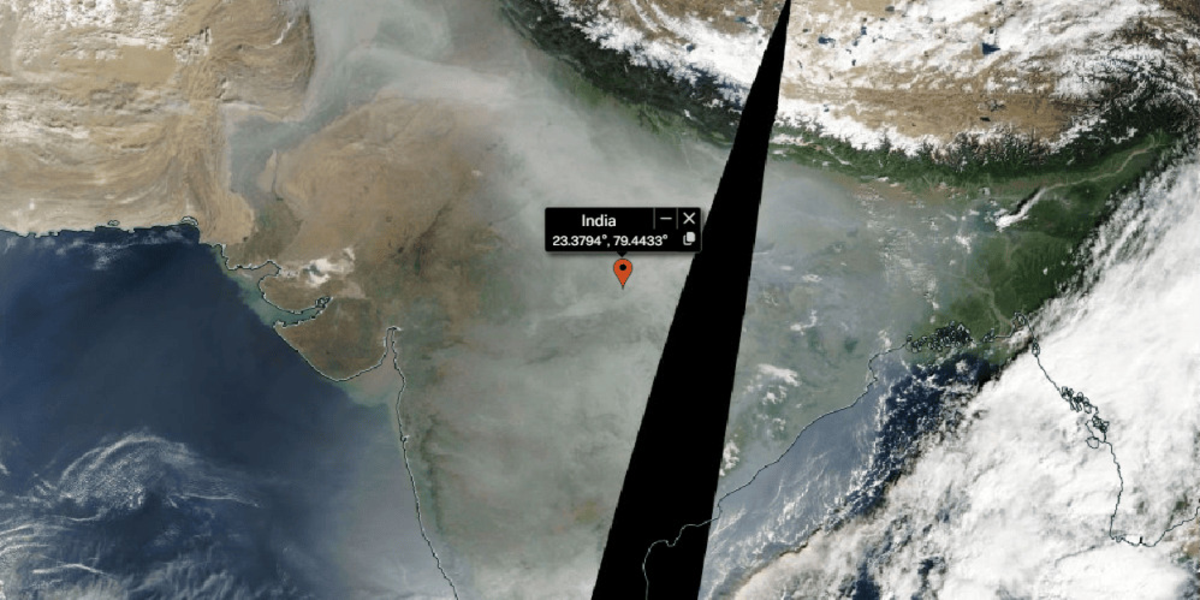
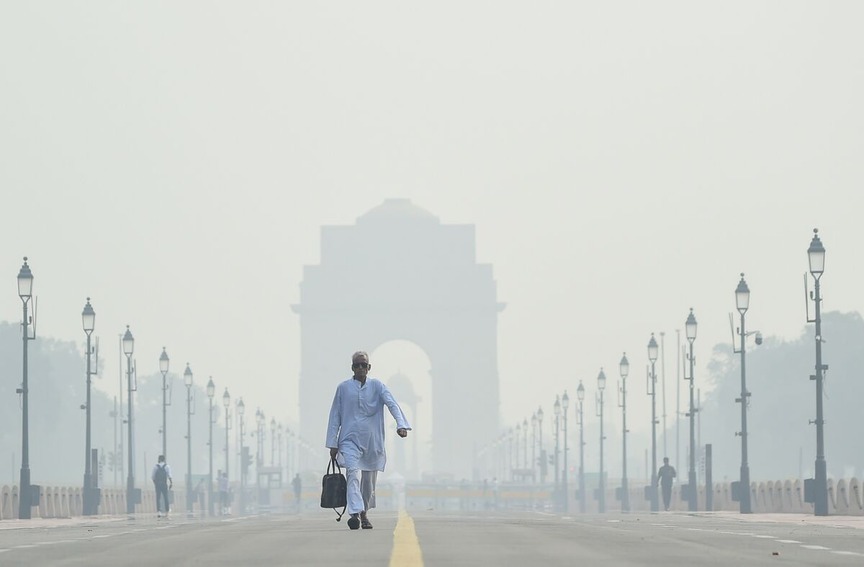
Pollution is a seasonal problem in many parts of northern India and neighboring Pakistan, as the cold, heavy air of winter traps vehicle emissions, construction dust and smoke from agricultural illegal stubble burning
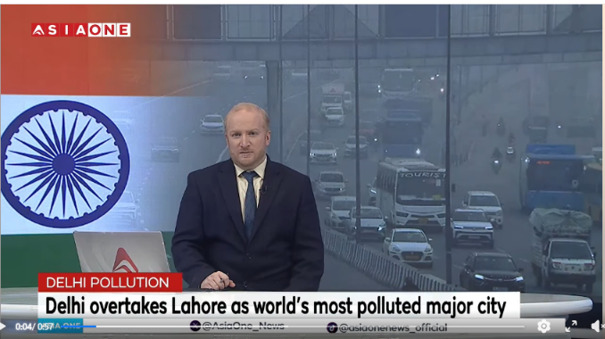
According to Reuters, the air quality index (AQI) in Delhi was "hazardous" at 334, making it the most polluted global major city, according to Swiss group IQAir, which measures air quality levels based on the concentration of toxins
India's official Central Pollution Control Board pegged the AQI higher at 403 and rated it "severe"
An AQI reading up to 50 is considered good with little or no health risk
The US - searching for soft power with Asian characteristics
China has so often been labelled –not only in the West – as the aggressive, up-and-coming dominant force in the wider Asian region (and beyond)
That interpretation of the country’s long-term vision mirrors a century-old tributary tradition weighing on intra-Asian relations as well as pervasive economic interference by way of Chinese trade and industrial investments across the region
Implications may actually be short-sighted and misconstrued because China is aging well before its South-West Asian neighbors (50% of its own population and growing...) to say nothing of India's looming demographic challenge (1.48 billion, surpassing China by 50 million people and growing...)
With a striking - and obvious - interest in regional stability, China might favor the rebalancing act which is the focus of my note - focus on educational initiatives and accelerate climate-sensitive policies
Admittedly, this development will appear unlikely if history and economic power are China's sole guide going forward
Plain self-interest might tell otherwise
Unsurprisingly, soft power strategies, initiated not by the US alone but by Japan, by Australia and by European countries with an interest in the region (such as France), will set their sights on the same hurdles - demographics and education, climate change and renewables
Because they have a universal appeal, and have the potential to reset the geopolitical dialogue, those challenges could nurture common understanding with China
A constructive outcome still remains in doubt but soft power priorities unquestionably open as yet poorly explored fields of shared concern and dialogue
The large military US footprint in Asia constricts its diplomacy to a defensive posture, not dissimilar from China's overbearing economic presence in the larger region
For America, soft power may secure recognition and support across South-East Asia, in ways military presence alone cannot
Rather than inducing Asian countries to 'choose' a camp, unswerving US military engagements for its allies will gain in credibility by aiming for regional stability
A framework of societal policies encompassing the entire region, addressing security as well as destabilizing risks of demographics and climate change would be transformative
US policy makers have their work cut out ...
China, for its part, will be no less challenged in refining its geopolitical textbook
Stretching far and wide, China's relationships with its near-abroad are inspired by the traditions of the 'Tributary System' inherited from ancient Dynasties - to be discussed in our follow-up notes
Even die-hard traditions evolve ... an opportunity for this age