
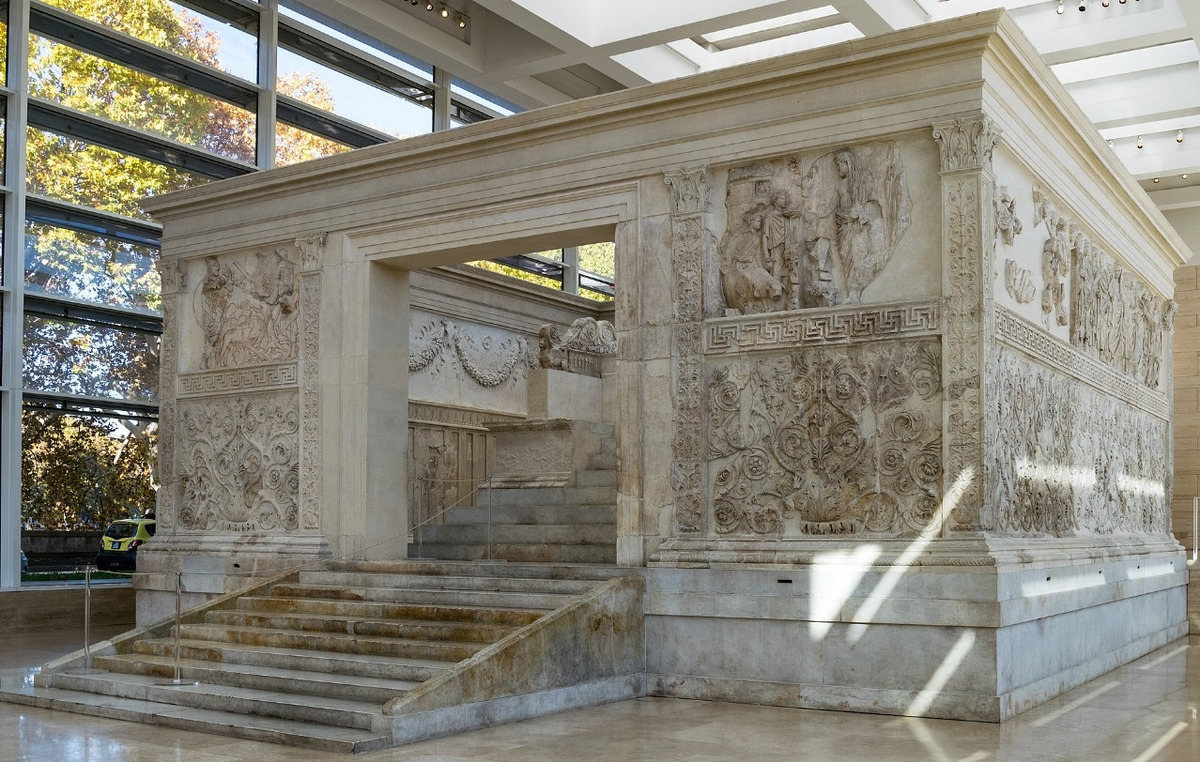
“Ara Pacis” – the altar of peace – was commissioned by the Roman Senate in July 13 BC – two thousand and twenty six years ago – to celebrate the return of Augustus from three years of war in Hispania and Gaul
The power of Augustus over the Roman Empire, as proconsul for life and with a religious title approaching divinity, was by that time absolute
Consecrated under his rule and dedicated to Pax Romana, with the empire stretching from Northern Spain to the Middle East by way of the Alpine regions in the North and Northern Africa in the South, Ara Pacis was already heavy in symbolism in its own right
However, it is the spirit of the monument and its fraught history which stands for elusive peace in modern times
As it happens, Ara Pacis holds many confusing messages about peace in a troubled world
The clarity of the monument’s original symbolism, set out by Augustus himself, held for centuries but proved elusive in the end
The destruction of Ara Pacis, and the spread of fragmentary sculptures far and wide across Europe, turned Ara into a very different message of frailty and of painstaking search of unnamed artworks, started 1 500 years after the founding of the monument
And it was only after another 300 years, by the late 19th century, that Friederich von Duhn, a German archeologist (1851-1930), recognized the scattered fragments for what they really were...Ara Pacis
Even then, with reconstruction of the monument launched for good in the 1930’s, Augustus’ vision of peace was debased by Italy's dictator Mussolini's attempt to create an ancient Roman ‘theme park’, with Fascist Italy basking in the glow of Roman heritage
Confusing in every way to modern sensitivity, from the ambiguities of original symbolism decided by Augustus to precious fragments scattered across Europe as so many memories lost in the whirlwind, to an awkward reconstruction remaining out of kilter to this day, the Ara is cold comfort for the proponents of peace in our time and – at the same time – lively proof of endless search and trust in the ultimate outcome, peace in all its ambiguities….
A promise of peace
A symbol in Roman time, the iconographic program of Ara spans Roman history, from the cave sheltering the ‘divine’ sons of Mars, Romulus and Remus, and the symbolic features of a warrior Roma, to an enthroned figure, seated amid abundance of grain and flowers, Mother Nature
The meaning, a distant echo to modern ears, remains unmistakable – the peace of Augustus is final and definite, resting on the reliability of military force and the fertility of nature
The procession on the outside North and South walls – lictors followed by priests, by officials and possibly by Augustus represented with his family – added gravitas to the symbolism
And Romans were most familiar with the personification of Peace as godess, in statuary and on coins of Caesar and Augustus
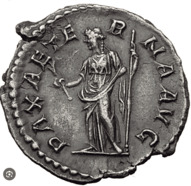
This is why the strongest – and most singular – statement of all is the representation of Peace at the altar, in the heart of the enclosure, by its very absence
The goddess of Peace, at the modestly decorated altar of the Augustian Ara with a marble slab simulating a wooden stockade, is nowhere to be seen
A symbol made all the more obtrusive by not being there
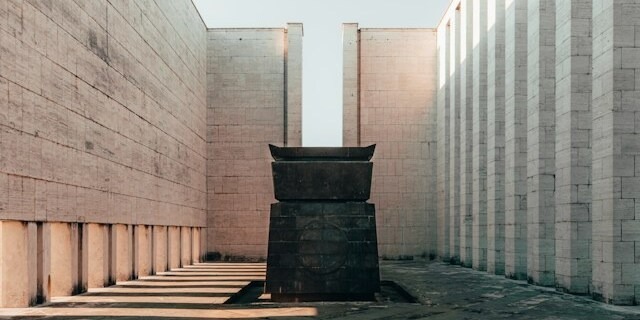
Located, by Augustus’ request, not at the heart of Roman power but on the Martius Fields, the former flood plains of the Tiber, the Ara restated the intimate link between civic power and agricultural bounty for which the Fields were renowned
Oblivion and resurrection
Initially protected by an embankment erected in the second century AD, the monument became buried under meters of silt deposits and largely forgotten as the city expanded and by the late 13th century, an English cardinal, Hugh of Evesham, built a palace on the site
Successive restoration to the palace brought fragments to light, were dispersed casually and got lost… until fascination with the Greek and Roman heritage by the 16th century led to enthusiastic search of antiques
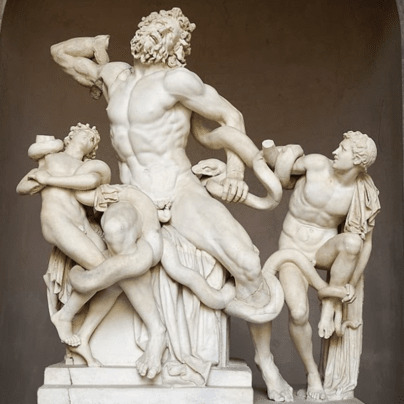
The prime example of this fascination is Laocoön and his Sons, a Greek sculpture admired by Pliny the Elder, which would go on exercising its artistic influence into the Baroque period. Rediscovered in 1506 in a vineyard close to Nero’s Golden House, with Michel Angelo in attendance for the excavation, Laocoön was led in a procession cheered on by thousands on a chariot, decorated with flowers and pulled by a team of fifty oxen, to the Vatican, where Pope Jules II took possession
As collecting fragments of antique art work became all the rage, many of the Ara marbles found new homes and, as the Secretary to Cosimo I reported in 1569, "15 or 18 pieces of ‘Greek marbles’…had just been discovered" and “although there were many dogs seeking to buy the prey, I got it by paying plenty for it”
And so it went, with marbles spreading across Rome (in what was to become the Villa Medici, as slab on a bishop’s tomb in the Gesù and later on in the Villa Aldobrandini) to Florence (in the Uffizi by 1780), to the Vatican, to the Louvre and on the Viennese antiquities market
Von Duhn’s and other German scholars’ recognition of Ara Pacis’ lost fragments turned the collectors' perspective upside down, spearheaded donations and initiated major excavation works under what was by then Palazzo Fiano (now Almagiù)
By this most singular course of history, the generosity of their former owners (with exception of five slabs with festoons remaining at the Villa Medici and a fragment bought by the Louvre in 1835) allowed Ara Pacis to reassert its symbolism … after more than 2 000 years
…except for the fact, in another twist of history, that the ‘new’ Ara was finally reconstructed in 1938, as propaganda and naïve boast of Italian fascism’s superiority, at a time when Europe was preparing for war
Meaningful all the same
But then, the message conveyed by Agustus’ monument may have been one of patience all along
Peace was to be represented not by a singular human-like figure but by the combination of images drawn from the Roman past, speaking forcefully to the people of Rome who could easily identify with the serene procession of religious and civic representatives on the outer walls
If there was no need to represent Peace in goddess Pax (from the ancient Greek Eirene) at the heart of the enclosure at the time, there surely was no need to do so amidst the wars of the 20th century… or today
Ara Pacis experienced the brittleness of peace, collapsing time and again in a firework of shards and lost hopes like so many marble fragments, before painstaking reassembly sets the world on a happier course
Augustus, as military commander and architect of durable peace, balanced the strength of Mars, the god of war, with the abundance of Nature, under spiritual and civic guidance: the processions visible to all on the outside walls are not decorative but the purposeful representation of higher authorities walking at a light pace, directing their gaze towards Mars and Mother Nature...and trusting in what the future held
Ensconced in a new protective housing of glass and steel, designed by the architect Richard Meier in 2006, Ara Pacis has been assigned 'museum' status (tickets are €14.50...)
An undeniable necessity to safeguard the artwork, the walled-in symbolism of Augustian peace comes across awkwardly garbled
Subdued for now by the loss of 'immediacy' in dialogue with the visiting public, Ara Pacis remains steadfast in its conviction
Peace is an endeavor, no single image will do when symbols drawn from past and longings for a better future coalesce with public yearnings
Are the times any different now ?