

As the war led by Russia in Ukraine unfolds and as the human toll keeps rising, the awkward compromise sought by European governments becomes ever harder to square
Caught between dependency on Russian fossil fuels and popular outrage, Germany, epitome of Europe's contradictions, has seemingly lost the plot
The country remains stuck in neutral, a lumbering giant deriving 55% of its natural gas from Russia, 30% of its oil and half its coal
Falling off its pedestal, Germany, ever the reliable driver of Europe's economic resurgence, has become overnight the basket case of continental frailty
The contrast with all strongly held policies of old is blunt
Ostpolitik, the symbol of a close East-West partnership based on energy is dead
The grand plan to phase out nuclear power, and to shift from coal to renewables by relying on a 'gas bridge' to make up the shortfall for a few years, looks distinctly shaky...if not dead cold as well
Alternative energy sources such as LNG regasification stations and additional renewables investments, will not (realistically) come on line before two to three years, if not more
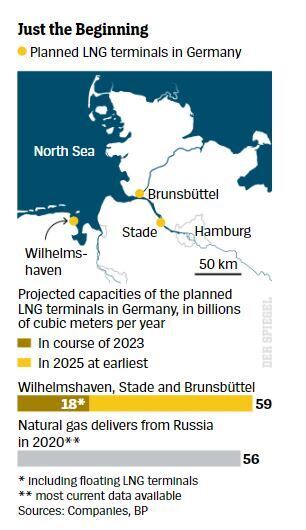
Indeed, quoting Chancellor Scholz, Germany is at a turning point, as is the entire European continent - but where to ?
Of the three dominant continental powers, North America, China and the European Union, the later alone has to confront existential challenges
If Russia ends up weakened by the storm its regime unleashed onto itself, the U.S. will be tempted to notch up a positive...at least in the short-term
By remaining non-committal throughout the crisis, China may benefit most, as its relationship with Russia veers from partnership to dependency of the later and to outright control over time...hardly a favorable development in the global balance of power
The tough decisions are Europe's alone
For lack of a unifying vision, under the spell of populist promises, and tempted by dubious compromises, what will it be ?
The omens are not good
A social catharsis
International public outrage at the war waged by Russia in Ukraine has prodded democratic governments to a far-reaching response, and its unanticipated forcefulness has surprised, from the Kremlin to Western commentators
Deeply troubling by themselves, the images of death and dereliction may have awakened the consciousness of 20th Century traumas, because the 21st Century aggression on Ukraine brings to every screen the guilt shared by the countries engaged in mortal conflict during two World Wars
Germany's aggression of Belgium on August 4, 1914, the popular resistance and the steadfast guidance of King Albert could have been a prologue to Ukraine's suffering today, with the deliberate shooting of civilians, including Belgian priests, with hostage executions at Warange or with the total destruction of a village, Battice, all on the very first day of invasion - the start of a murderous advance which left 5 521 Belgian non-combatants dead
The bombing of Rotterdam, the great Dutch port, on May 10, 1940, destroying much of the city center, leaving 800 to 900 people dead and 85 000 homeless, was also planned with the intent to break the country's resistance by deliberately aiming the civilian population
And, as WWII ground on, Allied forces were no less keen on civilian targets
The bombing of Dresden in Eastern Germany by the British and the American Air Forces, February 13-15, 1945 made 25 000 victims and the strategic justification of the raids has been in doubt, maybe non-existent
As for the American program of raids, firebombing 67 Japanese cities, it would, according to General Curtis LeMay, quoted by Robert McNamara, have led to their post-war trials if the U.S. had lost...
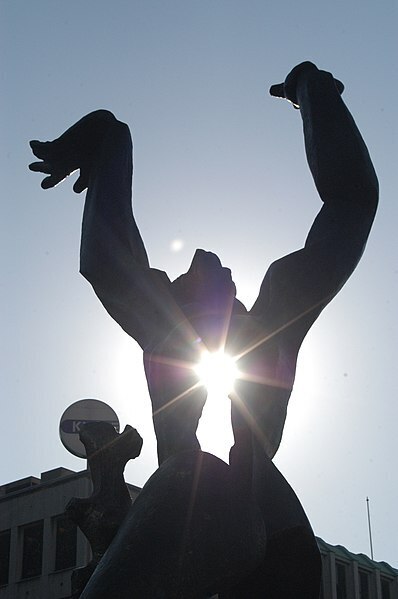
Faded they may have, but these memories had not gone away and the backlash has been swift
A sense of guilt, overwhelming in Germany, and the determination to rebuild strong and peaceful nations across the Continent, have been markers for half a century
How much these commitments will weigh in the balance of economic hardship remains to be seen
Hard choices
The bombing of Ukrainian cities, the indiscriminate targeting of civilian apartment buildings and the deliberate killing of non-combatants mirror a past Europe had hoped to leave well behind
But still...
However righteous the indignation fired by round-the-clock media reporting, the outpouring of popular sentiment leaves out a bleak reality - the prerequisite to find an exit strategy
Moral grandstanding will not do, and short of engaging in warfare, only the strictest sanction regime, spreading hardship in Russia's economy and impairing its financial system, will move the needle on a peace deal
Governments have been reluctant to lay out the terms of a peace agreement because no solution of compromise appears conceivable
If a deal were to imply a partition of Ukraine, Russia's spoils of war would install a powder keg of irredentism at the heart of Europe
If sanctions must preserve Ukraine's integrity by compelling Russia to back down, Germany's steadfast refusal to bear the full pain of energy-import curbs has impaired their credibility, perhaps beyond recall
...and why would India or China commit to energy sanctions when that key NATO member does not ?
Rising to the occasion...
Germany's vulnerability to a natural gas crisis is not in dispute
The country's reliance on Russian gas (55% of its imports) is much higher than the EU average (40%), as its energy priorities shifted away from coal and nuclear energy
High gas demand in the chemicals, metal processing and food industries, with 1.2 million jobs at stake, are putting the entire economy on edge because of the deep integration between sectors
Estimates of % gas supply that German industrial sectors can replace by electricity, oil and renewable energies in the short term (winter 2022) turn out to be very modest (7.9% according to a bdew study quoted by der Spiegel)
Research about potential effect of an interruption in gas deliveries has been in dispute, from a drop in activity seen as 'manageable' to a recessionary slump
These projections are dismissed by the German government and the argument appears to be two-fold
- Energy provision has to be planned over the medium to long-term, to diversify sources and to allow industry to adapt
- Part of the 2010 legislation of the "Energiewende", a transition to a low carbon, environmentally friendly energy supply, may need to be reevaluated, such as by postponing the closure of the last 3 nuclear powerplants (forecasted in the current year)
Europe's moment ?
Placed in European context, energy supply concerns are not Germany's alone, and the interconnected gas network attests of shared interest
- the capacity of operating LNG stations is not constrained; current regasified 'payload' is 798 TWh, below 50% of the 1715 TWh capacity of the terminals
- availability of LNG transport vessels is the limiting factor
- in case of aggravation of the conflict in Ukraine, European efforts to relinquish gas imports may be countered by Russia's preventive blockade of deliveries
The European Commission intends to reduce Russian gas dependance by two-thirds at the end of the year, with (probably) a few important caveats
- by blocking exports temporarily, Russia could prevent the build-up of reserves (down to 25%) and precipitate a crisis for the coming winter
- non-Russian gas exporters, foremost Norway (50% of European gas production and 20% of consumption), have locked-in contractual commitments, constraining attempts to rebalance global gas demand in Europe
- governmental subsidies are obfuscating the true energy cost for the consumer, creating false incentives to consume a constrained stock
Alternative non-fossil sources, part of long-term planning for renewables and for new generations of nuclear power plants, cannot be expected to pick-up the slack
Bruegel, a European think tank based in Brussels, lays out the challenges, measured in TWh (Terawatt-hour)
Average demand in Europe, based on latest monthly consumption data (2018-2021), varies between 440 TWh during the winter months and 240 TWh in the summer)
Assuming a stable consumption pattern, other gas exporters - Algeria, Norway and Azerbaijan - and LNG imports running at maximum regasification capacity - may manage to cover spring and summer demand without Russian gas
However, by October, EU-wide storage (320 TWh) will be insufficient with demand growing in the winter months
If Russian imports are excluded, the shortfall, building up quickly from December, would reach a negative 400 TWh by the end of the winter
The alarm of the German industry will be reverberating across the Continent any time soon, as we expect to discuss in Germany - on Edge