

In India, everything digital is outsized - mobile subscribers counted in multiple millions (edging towards one billion users), digital transaction volume in multiple billions and transaction amount in trillion Indian rupees (INR close to a $1 billion equivalent in 2021)
Recasting India as the ultimate frontier for everything digital, growth rates of this huge base brought in an additional 400 million wireless data subscribers in less than 4 years (by 2021), 20 billion digital transactions in the space of a single year (2021) and an increase of $500 billion in transaction amount (+100% in 21/20)
Highly supportive of the drive to digitalization, official policy will be fraught with ambiguity going forward...
...between the quest for a neutral space leveling the field for all apps and outsized entrepreneurs seeking dominance on and off the grid
Entangled regulations remind of the legendary Gordian Knot, too complicated to undo but holding the promise of becoming king of all of Asia for whoever could manage to...

...until Alexander came along, with his sword in the 4th century BC
The main driver of India's exponential growth has been the adoption rate of the smartphone, close to covering the entire Indian population (1.4 billion people as of 2022)
Next to entertainment's big draw - games and video - the mobile phone gives access to a suite of public services (by way of biometric identification) and direct links with bank accounts
Streamed over a neutral framework, connecting all users with most banks (297 as of January 2022), the Universal Payment Interface (UPI) and its outsized responsibility in digital payment has wetted too many appetites for its own good
In terms of penetration of mobile payment adoption, an indicator of the potential market size, China dominates at 39.5% followed by South Korea at 29.9% and Vietnam at 29.1%
India, with an adoption rate of only 20.2% in 2021, is the growth story none of the global digital giants can afford to miss
The Central Bank of India is considering competing - and for-profit - payment systems as backups sharing UPI’s regulatory responsibilities... However, since the announcement in August 2020, the numerous candidates remain in limbo...
Is the plan wishful thinking, or even a way to set the fox(es) loose in the henhouse ?
India is in the middle of a continent-sized experiment with cashless payment at the heart of all things digital
Instead of proceeding stepwise, India’s regulators saw the benefit of a strategy skipping in one scoop the multiple intermediaries controlling digital access to public services and to the financial system
Data Masala - an Indian recipe
Digital access is powered forward by policy choices – giving a digital identity to every resident of India, favoring financial inclusion of an underserved population – and by the tidal wave of mobile adoption
- Aadhaar, launched in 2010, aimed at giving every resident a permanent, unique, and secure digital identity based on biometric and demographic data – covering 1.4 billion Indians as of February 2022 (Wordometer estimate)
- Financial inclusion programs, which have been a priority in one of the world’s most underbanked countries (along with China), have introduced multiple inducements to open bank accounts, targeting rural areas ensuring access to financial services such as savings and deposit accounts, remittance, credit, insurance, and pension in an affordable manner, with 432 million accounts accessible as of Sept. 21 (66% in rural and semi-urban areas) and deposits of $20 billion
Although as many as half of the bank accounts remain inactive, the huge uptake of smartphone subscriptions – reaching 810 million by the end of 2021 – turns out to be the tsunami-like force driving the digital push of the India government
One of the most significant contributions, a life-changer for millions of Indians depending on government hand-outs, has been in direct crediting bank accounts (which every Indian was required to open) with the entitled cash amounts
Not only were recipients guaranteed to receive their allocation – without any ‘leakage’ – but mobile payments, in sync with growing e-commerce business, got a boost which would have been unimaginable in a cash-only society
In synergy with digital payment options, the news and entertainment features of smartphones opened a continent-sized window to a vast population left behind until now... and the digital means of access
China - Slaying digital dragons
Amidst exhilaration for all things digital, India has probably been a keen observer of China’s experiment under comparable circumstances, a few years earlier
China also went through a wrenching game-changer
Between budding e-commerce retail, hoping to cater to a vast population, and unreformed banking practices, the similarities between the two countries were striking
China opened a tremendous opportunity for third-party payment systems which benefitted e-commerce giants Alibaba
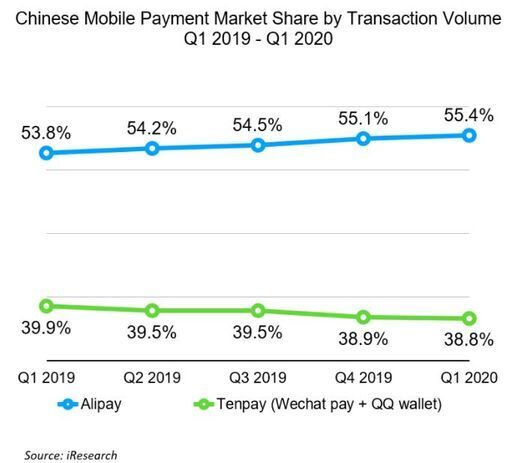
Because of their market penetration, these end-to-end payment systems became extraordinary data hoards, profiling consumer habits and mastering deep knowledge of small-to-medium businesses sales turnover, in real time
Ant, Alibaba’s financial subsidiary, and to a lesser degree Tencent, were in a commanding position to advise the banks on credit allocation – with unequalled reliability and full control over this core bank function
The recent travails of the Chinese regulators to regain control over these third-party (non-bank) intermediaries left unchallenged for too long are nothing short of spectacular
Even in China’s command economy, course reversal is painful and, after prohibition of Ant’ IPO in November 2020, financial reorganization is far from over
India - Securing interconnected digital payments
India must have observed the build-in risks of China’s tremendous digital run with awe and, even without foreknowledge of the Chinese e-commerce giants’ expansion in data analytics, Indian regulators pivoted to a unique approach
An umbrella entity, the National Payment Corporation of India (NPCI), was set-up in 2009, with the sole responsibility of setting up and managing the country’s retail payment ecosystem
A country-wide neutral framework of digital transactions could bring together a decade-old effort of convergence between individual identification (by way of Aadhaar), access to banking facilities (via inclusion programs) and near universal mobile adoption
Run by the NPCI, and debuting in 2016, the Unified Payments Interface (UPI), a largely free digital payments ecosystem, allowed users to link their phone numbers to their bank accounts
This is what made UPI so relevant as unique framework for all transactions between bank accounts and for digital payments relying on any number of accounts – almost from the start a considerable success, an interconnected ecosystem riding the country-wide adoption of mobile communications
Irresistible and unavoidable, UPI services were adopted by 297 banks as of January 2022 (from 71 in January 2018)
The innovation has had profound consequences by allowing transfer and receipt of money via apps, opening the way for high volumes of transactions at minimal cost
Relentless growth, month after month...
| NPCI | Active Banks | Transaction Volume | INR Amount | USD Amount |
|---|---|---|---|---|
| 2021 | in millions | in trillions | in billions | |
| January | 207 | 2 303 | 4,31 | 57,62 |
| February | 213 | 2 293 | 4,25 | 56,81 |
| March | 216 | 2 732 | 5,05 | 67,47 |
| April | 220 | 2 641 | 4,94 | 65,97 |
| May | 224 | 2 540 | 4,91 | 65,57 |
| June | 229 | 2 808 | 5,47 | 73,15 |
| July | 235 | 3 248 | 6,06 | 81,02 |
| August | 249 | 3 556 | 6,39 | 85,41 |
| September | 259 | 3 654 | 6,54 | 87,45 |
| October | 261 | 4 219 | 7,71 | 103,10 |
| November | 274 | 4 186 | 7,68 | 102,69 |
| December | 282 | 4 566 | 8,27 | 110,50 |
| Total | 38 745 | 71,59 | 956,77 | |
| source NPCI - Product Statistics (indicative) rate 1 INR = 0,013364104 USD |
||||
With transaction volume growing from 3.7 billion in 2018 to close to 19 billion in 2020, COVID has been a game-changer in payment habits
Transaction volume for 2021 of 38.7 billion - a year-on-year growth rate of 100% - with transaction amount on similar exponential curve (+110% over 2020) - signals a virtuous loop of growing acceptance
In practice, NPCi’s operations have been criticized by the banking system for empire-building, taking unfair advantage of its resources (NPCI has been collecting merchant commissions) and of its position at the cross-roads of digital payments
Integrating all forms of digital payments – from pre-paid toll road card (FASTag) to cash transfers (UPI), NPCI further extended its reach with its RuPay credit card, to much protest of the banking system (and NPCI shareholders) about the platform’s unfair advantage
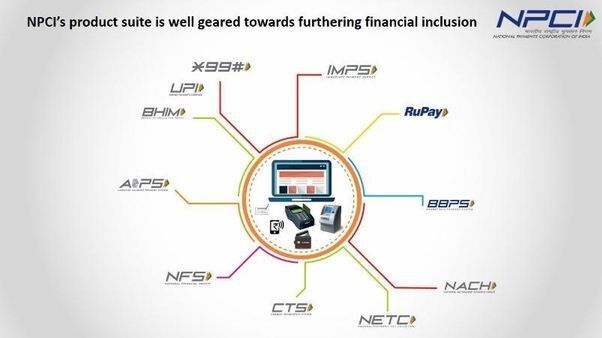
Critical to India’s economy, the platform’s exponential growth gave credence to the calls for diversification, aimed at spreading risk
UPI, the high price of success
Seemingly, the UPI platform had grown too large for its own good...and concentration risk became a self-fulfilling prophesy as the growth of UPI accelerated
Concentration risk, exclusive dependence on NPCI/UPI to handle a massive, and ever growing, number of transactions, is in fact inherent to the underlying concept of a neutral switchboard between the many stakeholders
Exposure to systematic risk has been a key factor in the central bank’s guidelines, published in August 2020, to de-risk the payments ecosystem by complementing India’s processor, with one (or more) alternative platforms, the New Umbrella Entities or NUE’s
Complementing was understood as a way to seek redundancy of existing systems rather than compete with the NPCI
Whether UPI had been getting too big 'for its own boots' remains an open question because the 2021 100% growth rate has been managed quite well...
Knives, however, were being sharpened in the wings
- banks, fearing to lose out on the bonanza of merchant commissions, are the usual suspects... and they are far from alone
- credit card issuers, Visa and Mastercard, cannot ignore the potential of exponential growth
- e-commerce ambitions of the dominant players, Amazon and Walmart-owned Flipkart, will be happy to explore the opportunities of 'walled gardens', if the chance exists...
- newcomer India's conglomerate Reliance, on the strength of its huge mobile network Jio (425 million subscribers as of Nov. 2021) and its strong presence in retail, is even more determined
- and, to cap off this role-call, Google (with its Google Pay app used by 70 million clients and present at over 10 million merchants, handling 15 billion transactions per year) and Facebook are strong partners of Reliance
Indeed, many knives for a single serving...
With its support of new 'umbrella' entities, the central bank probably intended to keep the contenders happy without losing sight of UPI's valuable interconnectedness
However, the wide-ranging scope assigned to the new entities, raising hope on every front, wetting the appetites and stirring animal spirits, may ultimately satisfy no one...
In context....
NUEs will be allowed to set up, manage and operate new payment systems, especially in the retail space, comprising but not limited to regular and white-label ATMs, point-of-sale (PoS) devices and Aadhaar-based payments and remittance services. They can also develop new payment methods, standards and technologies and monitor-related issues within the country and internationally. NUEs can also support and promote developmental objectives like awareness building about payment systems.
These NUEs would be primarily responsible in developing new payment systems, standards and technologies, clearing and settlement mechanisms, while monitoring, addressing and preventing relevant risks and frauds. It would diversify easy payment options beside boosting transaction volumes with tremendous expansion of e-commerce. Thus, NUE could also become instrumental in furthering financial inclusion and promotion of fintech.

By expecting the NPCI and the new ‘umbrellas’ to act as each other’s backup in keeping the massive ecosystem seamlessly operational, the central bank was taking a leap of faith
Where NPCI’s payment platform had been successful in securing interconnectivity as only a neutral intermediary could, competing payment systems enjoying UPI’s regulatory responsibilities as backups should was at best marred with wishful thinking, at worst a way to set the fox loose in the henhouse
Since August 2020, and official closure of candidacies in March 2021, and with the future of digital India at stake, Umbrella Wars were set to begin in earnest
Whether a Swiss knife is a good alternative to Alexander's sword remains to be seen...