
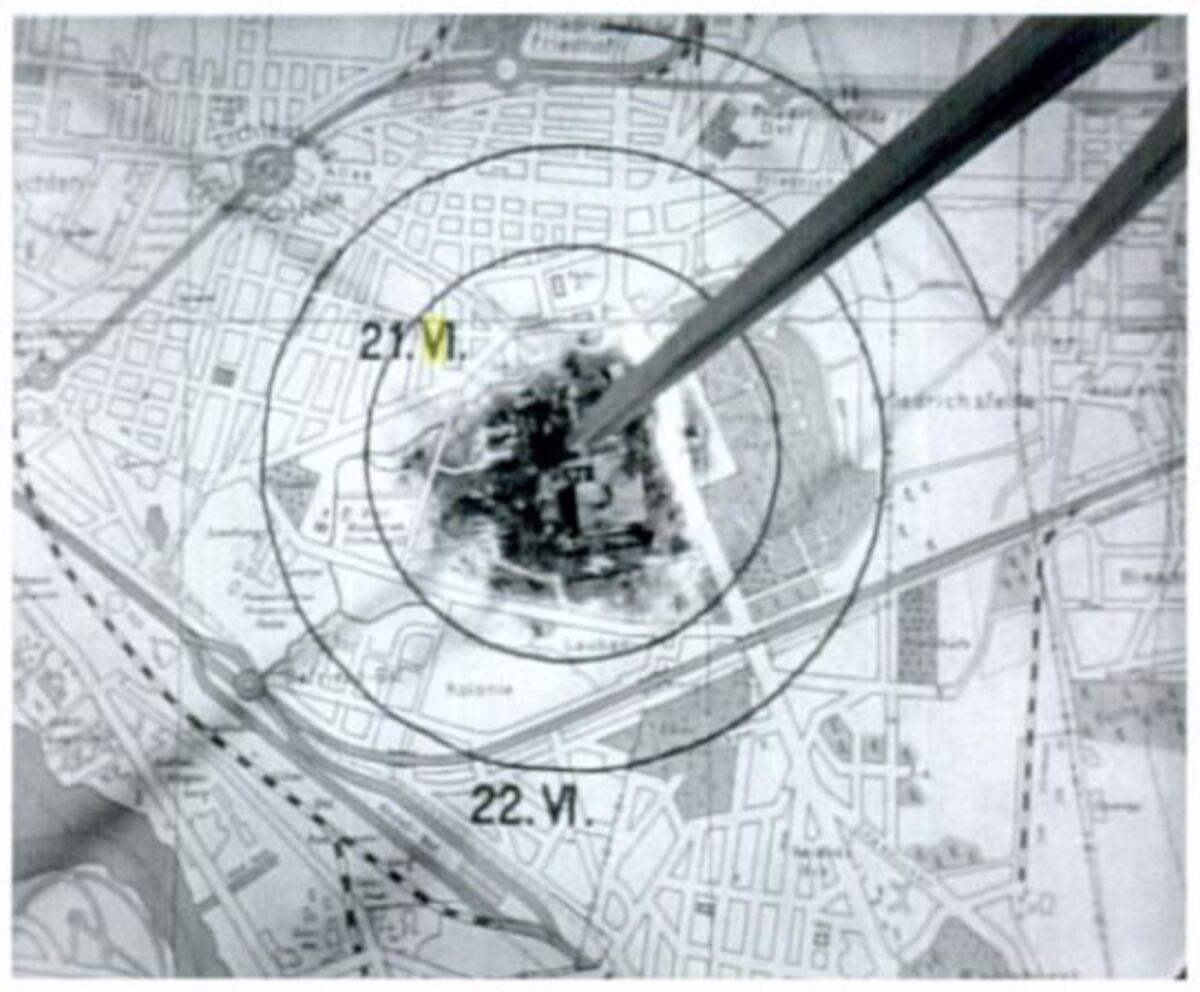
Released just over 90 years ago, in 1931, M is film director Fritz Lang’s haunting and emblematic Expressionist film, co-written with his then-wife Thea von Habou, about a serial child killer
In the frenzied manhunt, which accelerates the action, Lang paints a society which yields little by little to the thirst for blood as ultimate punishment, as the police and the criminal underworld both chase the murderer, played by Peter Lorre
By whistling obsessively Edvard Grieg's '‘in the Hall of the Mountain King’, Peter Lorre's character intimates the hopeless fate to which he is beholden but also the dark temptation gripping society's slide into unlawful order
The tune runs through M like a red thread, mirroring the struggle of the ‘common man’ at the mercy of the opposing political forces vying for legitimacy in public opinion, the constitutional order protected by the police and the violent efficiency of the underworld
Just like Grieg’s musical theme, composed for Ibsen's Peer Gynt, is relentlessly repetitive, the acceleration of the plot smothers ‘the people’, left with no alternative …but to give way to the temptation of violence in the name of order
Prescient with the rise to power of Adolf Hitler and the Nazi party just two years away, M again clouds the options of the German government today, dragging its European partners along in its age-old agonizing dilemmas
Only this time the violent order is Russia’s, committed to the aggression of Ukraine and floundering on delusion and historical grievances
The collective response, rising in defense of due process, remains as obviously non-negotiable as it was in 1931
Or at least it should be so…
...because arbitrage between weapon shipments to Ukraine (ever more of those) and domestic economic concerns (vocal and mounting) remains a half-way house, dithering between equally risky outcomes
…which is where Germany, along with its western allies, finds itself today, putting its industrial engine and its entire economic model in grave danger
Esteemed French author Bernard-Henri Levy has been reporting about humanitarian crises around the world
Intent on shaking international opinion out of its stultified complacency, while generally supportive of good causes but safely ensconced at arms’ length, Mr. Levy’s writing vibrates with human suffering, death's fatality and appeals for justice
His “Homage to Borodyanka” followed an early April visit to Ukraine
It is as personal an account as its namesake Homage to Catalonia, recounting the Spanish Civil War, was for George Orwell…
Reporting deeply troubling testimonies of murderous criminality committed on the Ukrainian population, Mr. Lévy shares his sorrow for everyone of the hundreds, soon thousands of victims with every reader
These gratuitous acts are certain to feed the nationalistic fervor of Ukrainian armies and militias
What is revealed by the horror itself is the loss of Russian control over its own forces
Discipline is the core ingredient of armies, executing with efficiency whatever tactical orders are transmitted
Troops running amok may be murderous but their military relevance will be going downhill, fast
Forlorn attempts by the Russian General Staff, putting their lives on the line to ensure discipline on the front, bears signs of a 'special operation' gone rogue, in the face of collapsing central command
Exit strategy
There appears to be none
All the parties have been drawn into a military conflict no one anticipated and the stakes have become too high to revert to a pre-war dialogue of sorts
This is true of Russia, which did not plan for fierce resistance on the ground, and of Ukraine, which summoned international public opinion by sheer grit and spirited resistance
Whatever compromise might have been at hand is out of reach because time horizons do not align at all
Russia’s playbook – a military push in East Ukraine – aims at dominance on the battlefield, in short order and at (almost) any human cost
Ukraine’s potential loss of the Eastern regions, its industrial and agricultural heart, would impair the country's future beyond recall – every reason to fight on, for months
Sanctions imposed by the Western supporters of Ukraine may be harsh but will not filter through for weeks, maybe months
For the U.S. and its European allies, long-term geopolitical interests add weight to their support in Ukraine’s fight
If the country were to lose control of its Eastern regions, the rump state would become entirely dependent on Europe, and its sizable population would have nowhere to go…
A Russian victory of sorts would expose Moldova to further encroachments, durably raising the tension on NATO’s borders
Russia’s potential dominance over global wheat exports – by topping its current stake (20%) with Ukraine’s 10% share - further strengthened by exclusive access to the Black Sea (via the port of Mariupol), wheat's major export route, would establish a very much unwanted control over key emerging markets grain importers
Wandel durch Handel
Western complacency, and Germany was hardly alone, has been self-serving in the confident assumption that ‘Handel’ – trade with Russia – would fire evolutionary change – ‘Wandel’ – of the regime
The motto – Wandel durch Handel – rang true in Germany for decades, embodied by none more so than former Chancellor Gerhard Schröder
Woefully out of step since President Putin tore up the understanding setting economic interests aside from geopolitics, Mr. Schröder might reflect with irony on the efforts of Germany’s political class, its business leaders and its trade unions representatives, to distance themselves today from their past support
As high ranking member of Russian energy companies’ boards - chairman of the shareholders’ committee of Nord Stream, board president of Rosneft and possibly member of Gazprom’s board as well - the former chancellor could represent Germany’s economic interests consistently, because they were aligned with Russia’s
Under pressure, Mr. Scholz, Germany's current Chancellor, has announced a root- and-branch reversal, unmooring the country's decades-old economic engagement from Russian partnerships and cross-investments
The decision to isolate Russia from trade may be manageable (although costly) for the businesses serving Russia's consumer markets
However, for businesses relying on Russia's abundant resources, and especially energy, the constraints of tangled dependency cannot be ignored
Interconnectivity of supply chains
If the intricate network of natural gas pipelines is anything to go by, linkage between Russia and Western Europe is as final as the fate of conjoined twins
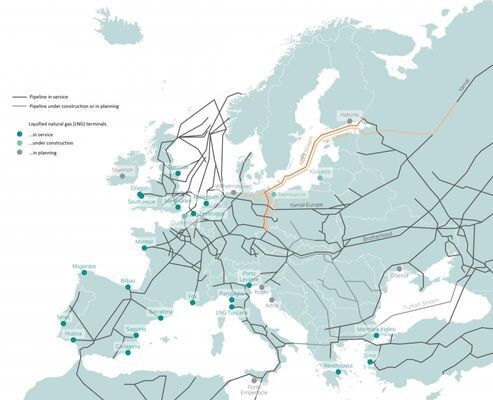
Mr. Scholz’s promise of a radical rethink led to predictable soul-searching and a flood of working papers, attempting to evaluate the impact of a Russian energy cut-off
Uncertainty prevails
The loss of energy provision will directly impact essential base industries (such as chemicals, fertilizers or steel production) but secondary effects down the supply chains may be lethal, especially in the all-important car industry, though much harder to evaluate
Percentage losses in GDP further obscure true exposures because they are asserted globally – from a reassuring but hotly contested 2-3% GDP loss to much higher estimates – ignoring the brutal impact on entire sub-industries
Complicating the issue still further is the disparity in dependency rates on Russian energy imports, from 0 for some Baltic states to approx. 50% (in Germany and Italy) to 100% for some Eastern states, France remaining somewhat aloof and confident in its nuclear power generation
This imbalance prompted some of the smaller states (such as Lithuania) and even Italy (with gas deliveries from Algeria) to run the clock with side deals, upstaging the energy requirements of the continent largest consumer, Germany
Deal changer
As the war In Ukraine enters its third month, pressure on the country’s supporters to engage more decisively against Russian aggression can be expected to grow, putting Germany’s energy dependency on the forefront
However, the physiognomy of war has shifted to tactics of attrition, supported by a growing stream of weapon deliveries to Ukraine, and the current sanctions will take weeks, maybe months, to compel a Russian rethink
A multipronged pressure on Russia’s fragilities needs to imagined
Only creative countermeasures are likely to upend President Putin’s calculations by laying down a credible timetable to end the conflict, enforced by stringent and overwhelming sanctions
Clear understanding that war in Europe will not be tolerated much longer has to be conveyed with great determination and willingness to pay the price
...as will be discussed in 'Europe's Hour" (maybe)