
Geopolitics often refers to the national interests of superstates butting heads at their respective borders
It is implied that the international standing of these states is enhanced - or weakened - by hard realities on the ground
Geography has echoed through the narratives of nations, in peace and in war, and frames international dialogue, or lack thereof, more often than is often admitted
To anticipate what the future portends, especially in the middle of war, it might pay to scrutinize - again - what lessons geography is holding back
French President de Gaulle's pronouncement during the Cold War that Europe stretched from the Atlantic to the Ural Mountains, included Eastern Europe, isolated behind the Iron Curtain, and Western Russia itself in one swoop of shared destiny with western Europe
The comment still rings true...
However, the rise of China as a preeminent Continental power calls for a fresh look at the map - or rather at two maps
- one map of the natural geography of the western tip of Eurasia, ignoring the national borders weighed down by bloody history
- another map taking an expansive view of the Eurasians nations, a landmass stretching from the Atlantic to China's sealborders and mostly taken in by Russia and China, with a much smaller appendage formed by the European nations
These maps have for centuries foretold national impulses to bolster security by force and war
Still....the maps also set out the terms of peaceful coexistence
They are the theme of this note
The North European Plain
Central to the European shelf, where the Eurasian landmass runs its course to the Baltic and Atlantic seas, the North European Plain is mostly flat, with few natural barriers, except for a river-system which contributed greatly to the larger region's economic wealth
Stretching from Northern France to Western Russia, by way of Belgium, the Netherlands, Germany, Poland, encompassing Byelorussia and a large swath of Northern Ukraine, the Plain is an economic powerhouse, boosting trade for every nation on the routes since the Middle Ages
The Plain is also every nation's security obsession - and nightmare - with battle-hardened armies powering unencumbered East and West for centuries
From the Thirty Year's War (1618- 1648) to World War II, Germany at the dead center of the Great Plain has been in succession victim and perpetrator, suffering untold life loss in the 17th century with an estimated 4.5 to 8 million soldiers and civilian deaths across all of Central Europe...and ever since, up to 1945
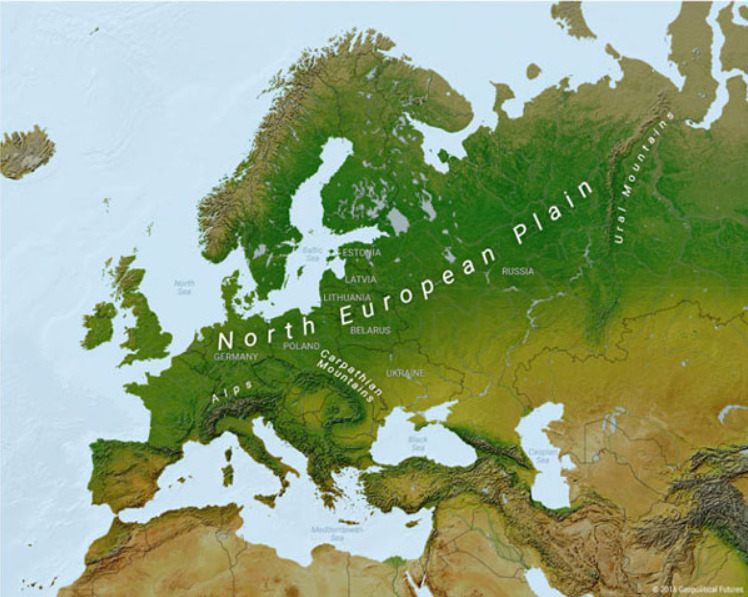
Germany's sense of insecurity has been fostered by the lack of natural boundaries
Geography and vulnerability to invasions have not, and never will, offer respite to Germany (nor to any nation on its borders) except - as history attests - within a European framework
The Peace of Westphalia (1648) which ended the Thirty Year's war, laid the groundwork by formally introducing a principle of exclusive sovereignty of each state over its territory, recognized by all the signatories
Metternich, Austria's foreign minister (and later day Chancellor), took the framework further in Vienna with the Congress System, bringing closure to the Napoleonic Wars in 1815 with a general consensus to ground the balance of power between Europe's great nations on legitimacy
The latest iteration - entertaining the most confidence with the deepest roots in the collective psyche - has been the European Common Market from 1957, metamorphosed in a European Union, welding political security and economic advantage tightly
While all three frameworks left many venues open to violence, the breakdown of the first two global agreement owes much to identical factors, when the lure of territorial gains, and the promise of security, meets the brazenness of a leader
Westphalia went down with firebrand French rulers harnessing military power to bring war back in Europe, as Louis XIV was followed by Napoleon
The Congress System, thrown out of balance by Prussia's dominance over German politics (following the defeat of Austria in 1866) but just about maintained in life support by Chancellor Bismarck's politics, collapsed under Germany's impulsive Emperor Willem II
After World War I, yearnings for revenge (mostly French inspired) tainted the attempts to reinvent a system of collective security, throwing the field wide open for another world war, as Chancellor Adolf Hitler managed to channel Germany's aggrieved sense of injustice (and insecurity)
History's oracle is an often dubious taskmaster, but the geography of the Northern Plain, grounded in "lone and level sands stretching far away", leaves no room to doubt
European security is bound to be a collective endeavor to be protected at all costs ...or else ...
Eurasia, immense and so close to the heart of Russia
Since the 17th century, the international security systems held out surprisingly well over long stretches of time, before disruption...
Devised at times of the European nations' global importance, the collective frameworks reflected geography and Germany's centrality
However, the glue prodding world powers to make the leap into an uncertain future, securing peace in the long run, was bound to be conceptual
It could be argued that exclusive sovereignty (after Westphalia) and legitimacy (mostly an implied understanding) entered international law at those distant times
The war in Ukraine, with its growing list of miseries, human tragedies, crimes and material destruction, may in retrospect be another major turning point in history, putting collective security back on the drawing board
Only this time, the sense of insecurity is Russia's alone
Any forthcoming security arrangement around Russia's centrality will draw in the entire Eurasian landmass
Blunt violence and unbridled assaults on civilian populations in Ukraine must not be allowed to distract from these hard lessons of geographic realities
Such is the price of peaceful coexistence
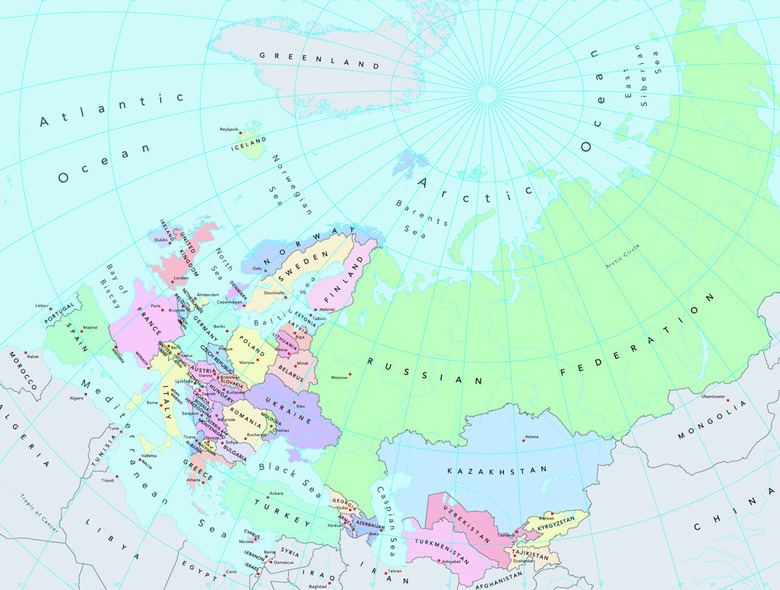
The political map of Eurasia displays Russia's centrality, drawing in the world's global players at the country's borders
Ukraine may well be a tempting target of Russian western imperialism (as would also be the Baltic States) but it is impossible to ignore the East...
Siberia is an immense and massive presence, usually acknowledged by Western analysts as Russia’s backyard of natural riches and the country’s historically disputed border with China
Modern Russian sources define Siberia as a region extending from the Ural Mountains to the watershed between Pacific and Arctic drainage basins, and southward from the Arctic Ocean to the hills of north-central Kazakhstan and the national borders of both Mongolia and China
Encompassing more than three-quarters of Russia's total territory, the continental size of Siberia is difficult to grasp, at 5 million sq. miles (13 million sq. kms) about 30% larger than both the U.S. (9.8 million sq. kms) and China (9.6 million sq. kms) and dwarfing continental Europe (Western Russia included)
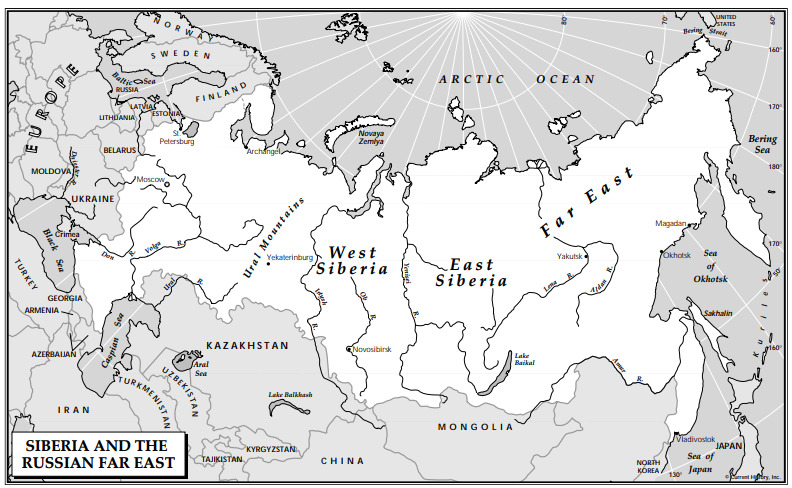
An international framework centered on Russia's security concerns cannot be anything but wide-ranging
The recognition of Ukraine's independent frontiers were in fact the clearest commitment enforced by the 1994 Budapest Memorandum on Security Assurances , making Russia's aggression all the more galling
However, along the country's sprawling frontiers, all neighboring powers will be very much in askance
Belarus will surely seek guarantees in an overarching framework if the violation of Ukraine's borders holds any lesson
Kazakhstan, another former Soviet state, will expect no less - and the region's energy wealth will concentrate Western Europe's attention
However, it is China's frontier with Russia which is the most fraught with peril
China is not exactly sparing with its remembrance of the Century of Humiliation, which describes the brutal intervention of Western powers and Japan from 1839 on
If Great Britain, France, the United States as well as Japan interfered aggressively for their sole benefit in the Qing dynasty - and later in the Republic of China - another power was very in the front row of profiteering, Imperial Russia in the 19th century, followed in lockstep by Stalin's Soviet Russia
By the Treaty of Aigun (1858) and the Convention of Peking (1860), following the Second Opium War and to avoid war on a second front, China's Qing dynasty was strongarmed into ceding a large swath of Outer Manchuria, setting the boundary along the Amur River and all the way down to Vladivostok, sealing off Chinese access to the Sea of Japan
Joseph Stalin pushed for additional territorial benefits as price of his support for the Mao's Communist insurgency, with less success, ultimately rolling back Russian influence in Xinjiang, long a strategic priority of the USSR and accepting the transfer of the Chinese Eastern Railway in Manchuria, Port Arthur and Dalian to Chinese control in 1950
China's GDP is approx. ten times larger than Russia's - and growing - with a new Silk Road, renamed Belt and Road Initiative, drawing regional economies of South-East Asia and Central Asia within Chinese orbit, closing in on Russia's borders
All of which puts Russia at a crossroad to preserve control, compelled to engage in a balancing act of which Siberia seems destined to be the pivot
Even though vast difference in population density on either side of the border between Russia and China leads periodically to Russian resentment about pervasive Chinese influence across the border, territorial integrity hardly seems at risk for now...
...were it not that 'Unequal Treaties' tend to fester in Chinese diplomacy, surfacing when the timing is right...
It is true that a Eurasian security arrangement is a long time off and that artillery is still rumbling on Russia's western front
Cease-fires might be short-lived if history is any guide, for lack of global acceptance of a renewed conceptual framework
It is ultimately Russia's centrality and the Federation's issues of security which could bring all the parties to the negotiating table, as has been the case for Germany for centuries
A new concept of international entente would have to build on national sovereignty, as old as the 1648 Treaty of Westphalia, and on the legitimacy enshrined in the 19th century Congress system
A tall order, it is true
Maybe it is Russia's call for Siberian roulette, our forthcoming note